A wool throw almost never has a tog rating, and ours don't either. Tog is a British unit of thermal resistance, and in the shops you will find it on duvets, typically from 4.5 tog for summer to 15 tog for the coldest nights. Throws are rarely tested for it, so there is no standard answer to "how many tog is a wool throw?", and a figure without a test behind it is only a guess.
You can still judge how warm a throw will be. Four things tell you most of what a tog number would: the fibre, the weight for its size, how densely it is woven and how you layer it. Below we explain each one and list our own throws by weight and warmth on our 1–5 scale.
What tog measures
Tog measures thermal resistance: how well a layer of fabric or filling slows down the heat travelling from your body to the cooler air around you. The higher the number, the more slowly heat escapes and the warmer you stay. The unit was developed at the Shirley Institute, a textile research centre in Manchester, and takes its name from "togs", an informal word for clothes.
The rating is measured in a laboratory, on the product itself, and in the UK it has become the standard way to label duvets. It describes warmth, not weight. Two duvets with the same tog can weigh quite different amounts, because a lighter filling can trap as much still air as a heavier one. Keep that in mind for throws too: weight is a clue to warmth, not a measure of it.
Why throws aren't tog-rated
Nothing requires a throw to carry a tog rating, and it isn't the custom. Part of the reason is practical. A duvet is used one way, spread flat over a bed, so one number describes it well. A throw gets folded in half over your knees, wrapped round your shoulders, bunched up on the sofa or spread over a duvet, and it keeps you warmer or cooler in each position. A single figure measured flat would describe only one of those uses.
We haven't had our throws tested for tog, so we don't give a tog value for them and won't estimate one. If you see a tog figure on a throw or blanket, it is fair to ask how it was measured.
How to judge the warmth of a throw instead
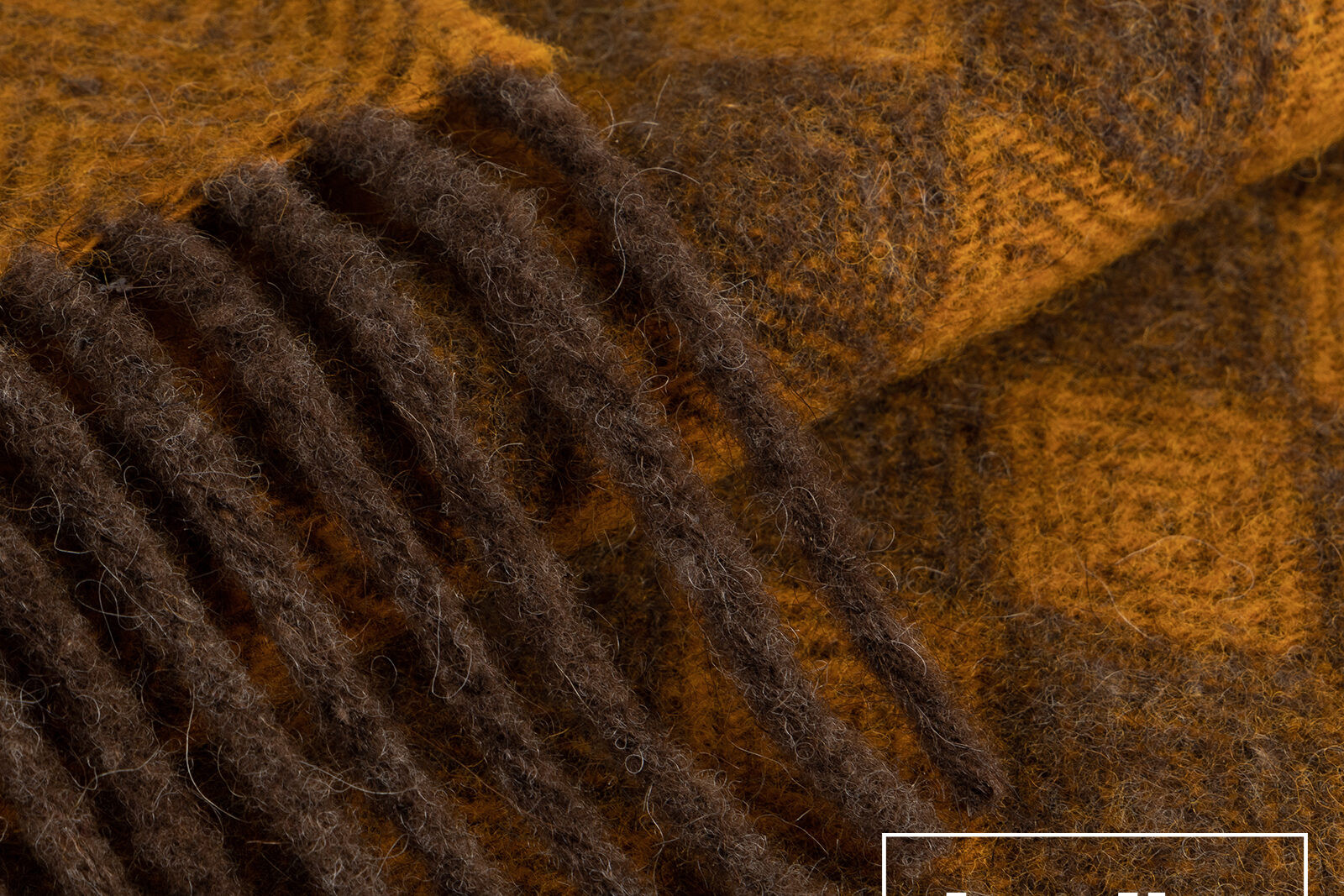
- The fibre. Wool fibres are crimped, full of tiny waves, so wool yarn holds a lot of still air, and still air is what insulates. Wool also takes up moisture vapour without feeling damp, so it stays comfortable when you warm up underneath it. Cotton fibres have no crimp and pack more tightly, so a cotton throw feels cooler than a wool one of similar weight.
- The weight for its size. Within one fibre, more grams per square metre means more fibre, and more trapped air, between you and the room. To compare throws of different sizes, divide the weight by the area. Our largest merino throw, for example, weighs 1,450 g over 150 × 215 cm, about 3.2 square metres, which works out at roughly 450 g per square metre.
- How densely it is woven. Hold the throw up to a window. The less light comes through, the denser the weave and the better it keeps out draughts.
- How you layer it. Layers add up. A throw folded double gives you two layers, and a throw over a duvet adds to the duvet's warmth. It is the same idea as an all-season duvet: two lighter duvets fastened together are warmer than either on its own.
Our throws by weight and warmth
Here is our whole range with the facts that matter for warmth. Warmth is scored on our own 1–5 scale, which compares our throws with each other; the scores are not tog values and can't be converted into them. The weight per square metre is our own arithmetic from size and weight, and for fringed throws the size includes the fringes.
| Throw | Size | Weight | About g per m² | Warmth |
|---|---|---|---|---|
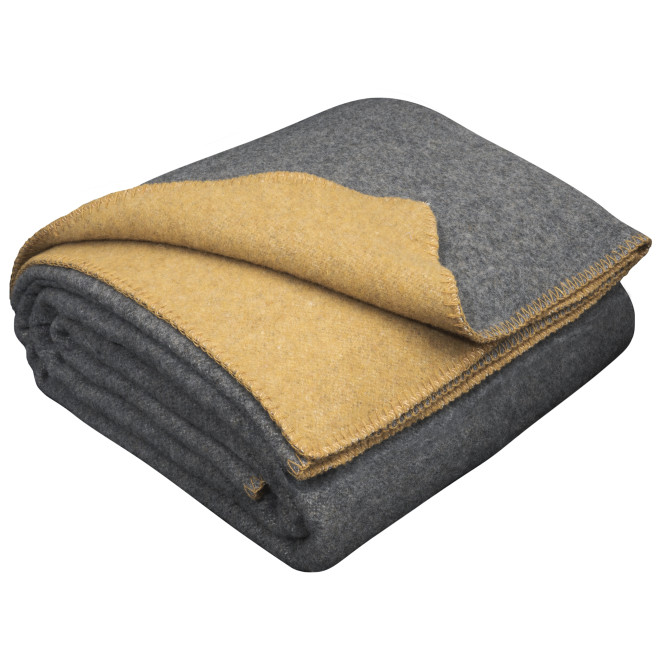
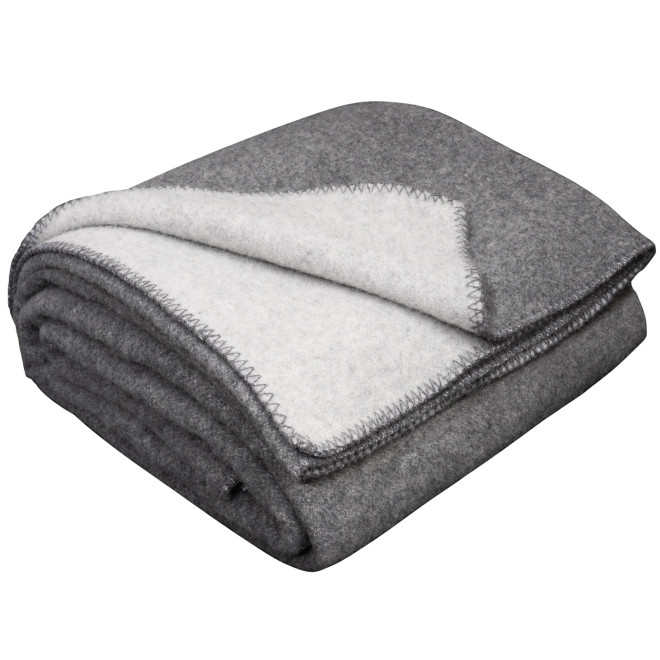
| Merino, double-sided | 150 × 215 cm | 1,450 g | 450 | 4 |
| Merino, double-sided | 130 × 170 cm | 890 g | 400 | 4 |
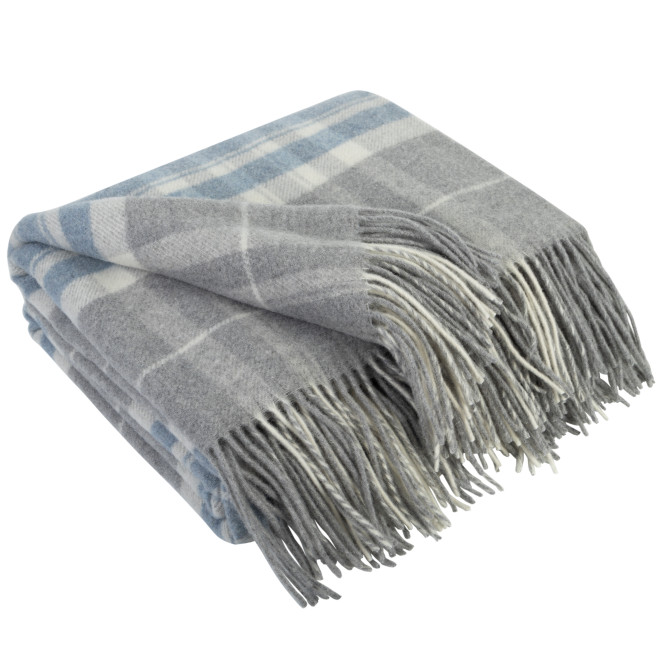
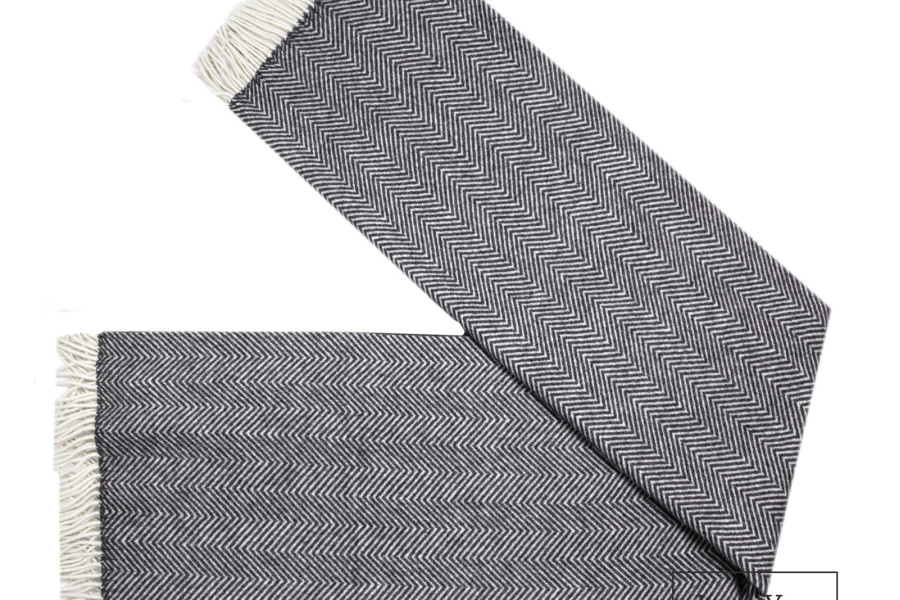
| Merino with fringes | 140 × 200 cm | 730 g | 260 | 4 |
| Cashmere-merino (10% cashmere) with fringes | 140 × 200 cm | 655 g | 230 | 4 |
| Pure new wool, solid colour | 130 × 170 cm | 890 g | 400 | 5 |
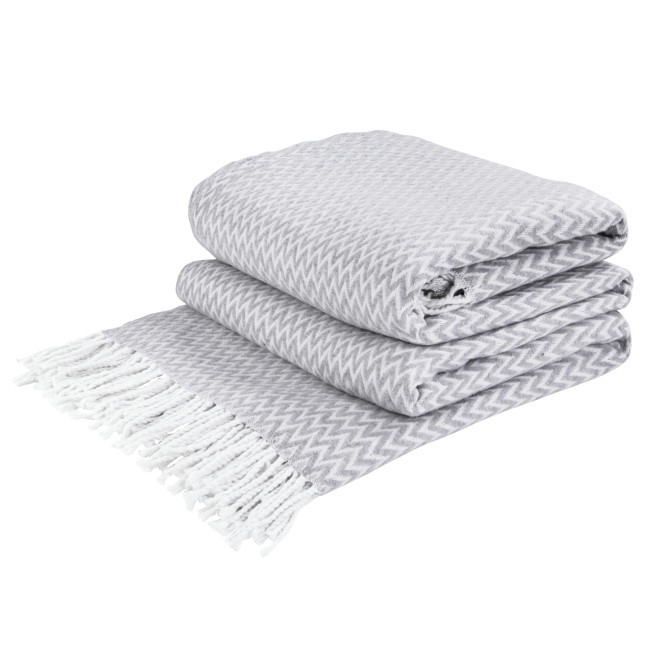
| Pure new wool, Scandinavian rhombus, with fringes | 140 × 200 cm | 730 g | 260 | 5 |
| Cotton-blend with fringes | 140 × 200 cm | 940 g | 340 | 3 |
What they are made of: merino is 80% merino wool and 20% nylon; cashmere-merino is 90% merino wool and 10% cashmere; pure new wool is 100% New Zealand wool; the cotton-blend is 50% cotton, 30% polyester and 20% acrylic.
Three things stand out. Pure new wool is our warmest material: at the same size and weight as the merino throws, it scores 5 rather than 4, though its coarser fibre can feel scratchy on bare skin. Within the merino range, the two double-sided throws carry far more wool per square metre than the fringed one, and the 150 × 215 cm throw is the heaviest in our range. And the cotton-blend throw is the heaviest of the 140 × 200 cm throws, yet it scores lowest for warmth. Weight only tells you about warmth when you compare throws of the same fibre.
Which throw for which job
- A cold bedroom, over the duvet: pure new wool, the warmest we make, or the 1,450 g double-sided merino if you want size and weight.
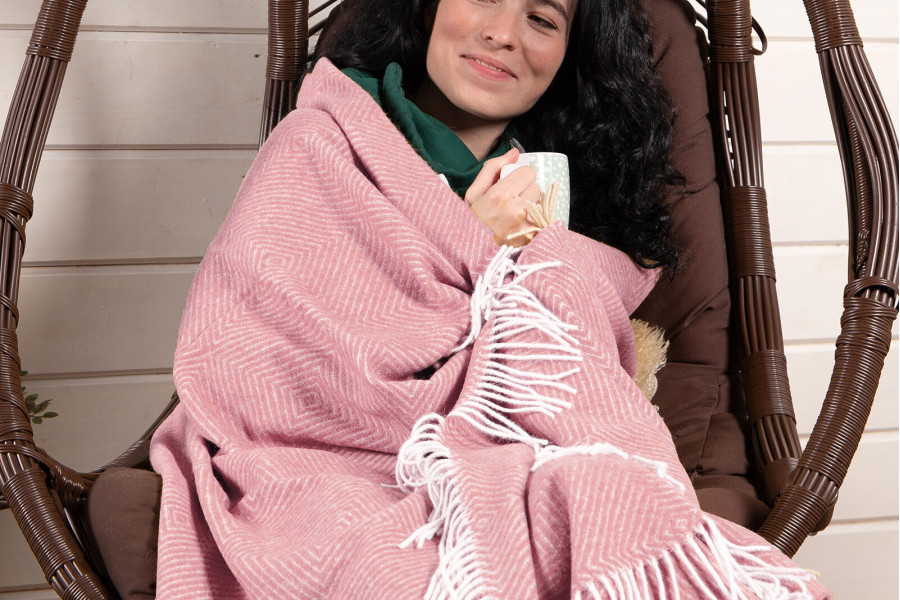
- Evenings on the sofa: one of our merino throws. The fringed 140 × 200 cm throw is light enough to pull over your legs and shoulders; the double-sided ones feel heavier and denser.
- Softness against bare skin: cashmere-merino (90% merino wool, 10% cashmere), the softest and lightest throw we make, still scoring 4 for warmth.
- Spring and summer evenings: the cotton-blend, which is less warm and can be hand washed at 30 °C.
Why some wools feel warmer than others, fibre by fibre, is explained in our comparison of merino, cashmere and pure new wool.
FAQ
What tog is a wool blanket?
There is no standard figure. A wool blanket or throw only has a tog rating if it has been tested for one, and most, including ours, have not.
Is a wool throw as warm as a duvet?
We can't give you a like-for-like figure, because the two are built differently: a duvet is a deep layer of filling, a throw is a woven fabric. For extra warmth in bed, lay a wool throw over your duvet, so that it adds a layer rather than replacing one.
Is a heavier throw always warmer?
Only when you compare the same fibre. Our cotton-blend throw weighs 940 g and scores 3 for warmth; our pure new wool throw of the same size weighs 730 g and scores 5.
What does your 1–5 warmth score mean?
It is our own scale for comparing our throws with each other. It is not a tog value and can't be converted into one.