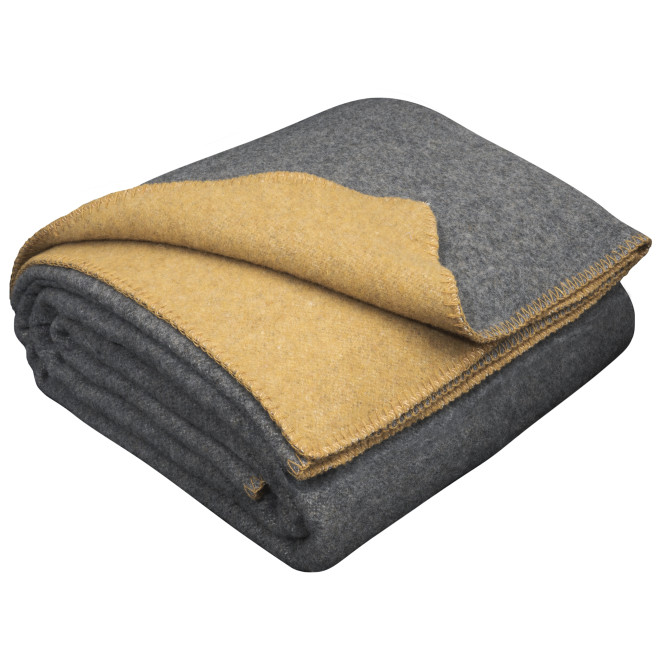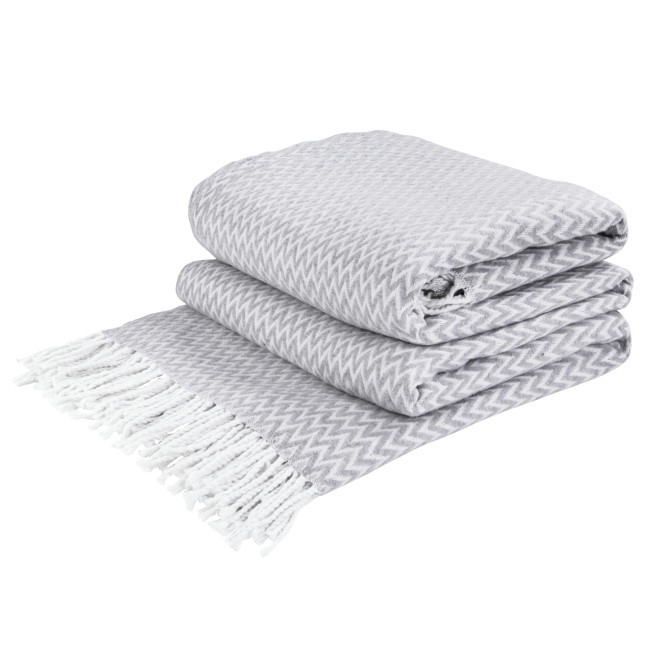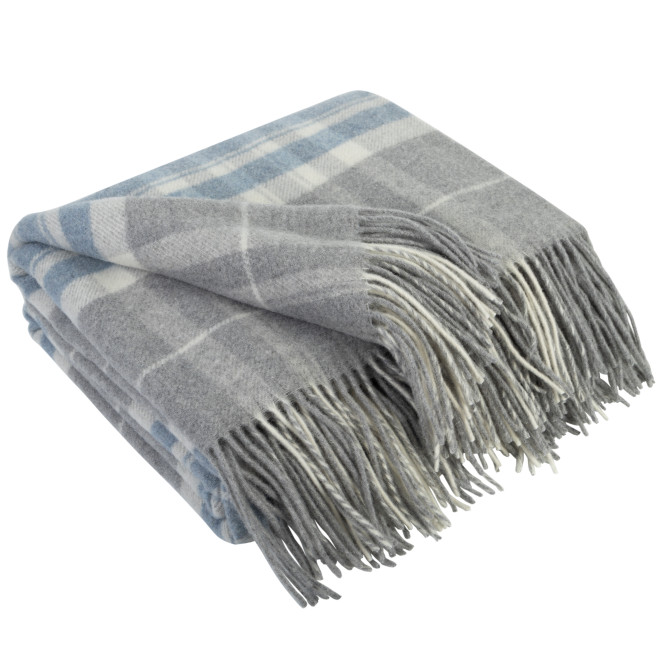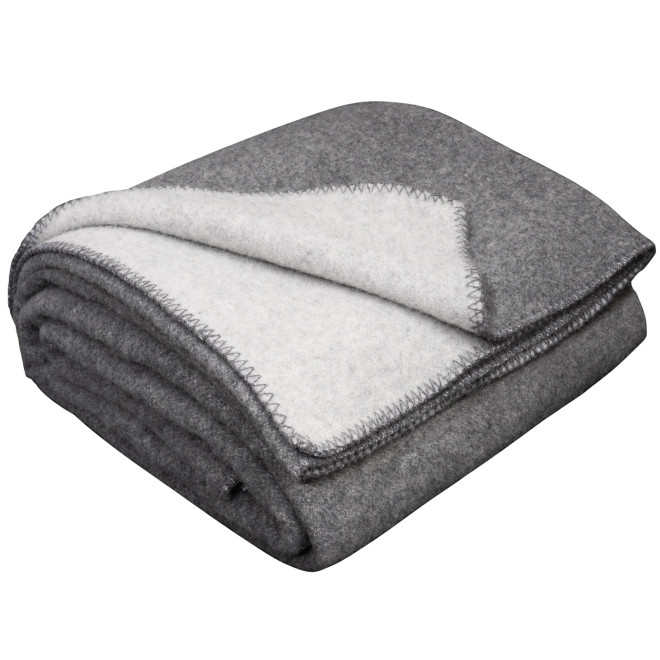
Is merino wool itchy? For most people, no. Merino fibres are fine enough to bend when they touch your skin, so they feel soft rather than prickly. The itch people associate with wool comes from coarser fibres, whose ends are stiff enough to press into the skin instead of giving way.
That doesn't make every wool throw soft. How a throw feels depends on how fine its fibres are, where it touches you and how much you notice prickle. In our own range, the cashmere-merino throws (90% merino wool, 10% cashmere) are the softest, the merino throws come close behind, and our pure new wool throws can feel scratchy on bare skin. Below: why wool prickles, who notices it most and how to choose a throw you will be happy to pull up to your chin.
Why some wool prickles
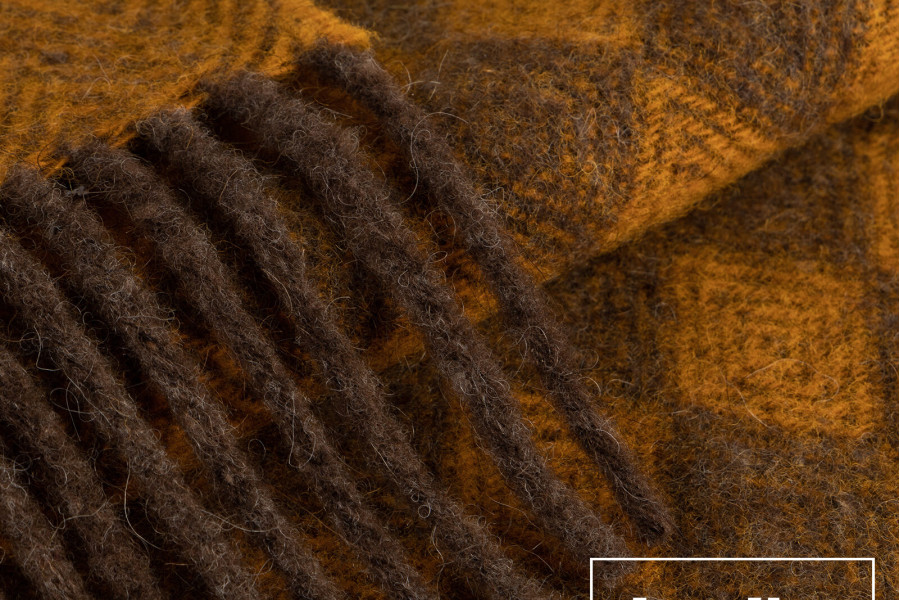
Every woollen fabric has countless fibre ends standing up from its surface, and when the fabric touches you, those ends push against your skin. Fine fibres bend under the slightest pressure, like the tip of a soft paintbrush, so nothing feels sharp. Coarser fibres are stiffer and push back. When enough of them do, your skin registers it as a prickle, and that is what most people mean by itchy wool.
So softness depends on the whole mix of fibres, not only on the average. A fabric that is mostly fine wool can still prickle if it contains a share of coarse fibres. That is why the fibre named on the label matters more than the word "wool": merino and cashmere are both very fine, while wool described only as "wool" or "pure new wool" can be much coarser. The way the yarn is spun and the fabric finished plays a part too, but fibre thickness is the main factor.
Who notices it more, and where
People differ a lot. Some wear any wool jumper without a second thought; others feel the lightest prickle. A few patterns are common:
- Where it touches you. The neck, face and inner arms notice prickle far more than your hands. A throw that feels fine between your fingers can feel different under your chin.
- Bare skin or clothes. Over pyjamas or a jumper, even coarse wool is rarely a problem. On bare legs, it is another matter.
- Warm, damp skin. Many people find wool prickliest straight after a bath or when they are hot.
This guide is about how wool feels. If your skin reacts to wool in any other way, for example with a rash, that is a question for your GP or pharmacist.
Our throws, from softest to crispest
We score softness on our own 1–5 scale, and we would rather tell you now than have you find out on the sofa:
| Throw | Composition | Softness | On bare skin | Price |
|---|---|---|---|---|
| Cashmere-merino | 90% merino wool, 10% cashmere | 5 | The softest we make | £84.90–89.90 |
| Merino | 80% merino wool, 20% nylon | 4 | Soft | £49.90–69.90 |
| Cotton-blend | 50% cotton, 30% polyester, 20% acrylic | 4 | Soft, with no wool at all | £21.90–32.90 |
| Pure new wool | 100% New Zealand wool | 3 | Can feel scratchy | from £49.90 |
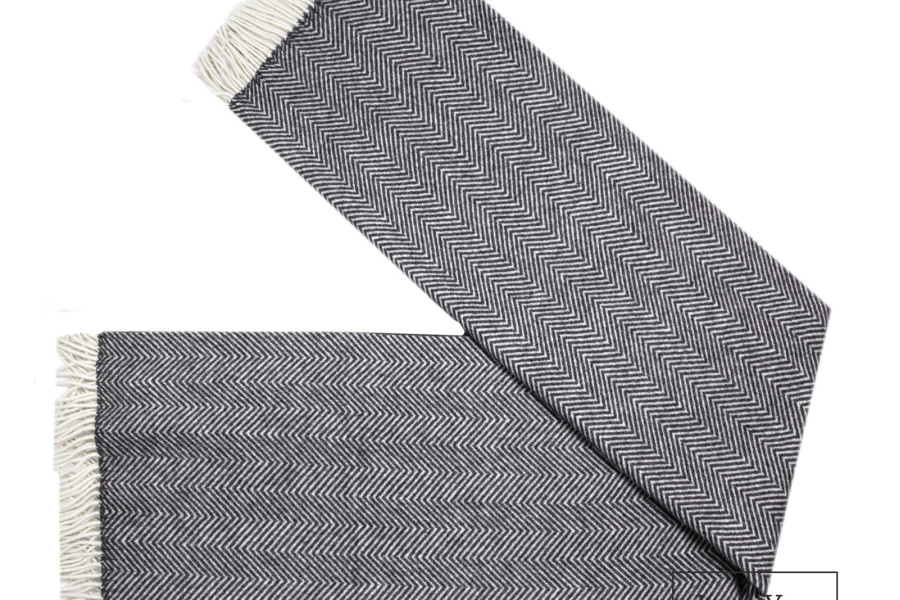
The cashmere-merino throws are the ones to choose if softness comes first. They are 90% merino wool and 10% cashmere, so the whole throw is made of fine fibres, with cashmere, finer still than merino, adding to the softness. Each weighs 655 g and measures 140 × 200 cm including fringes, in herringbone, stripe and tartan designs.
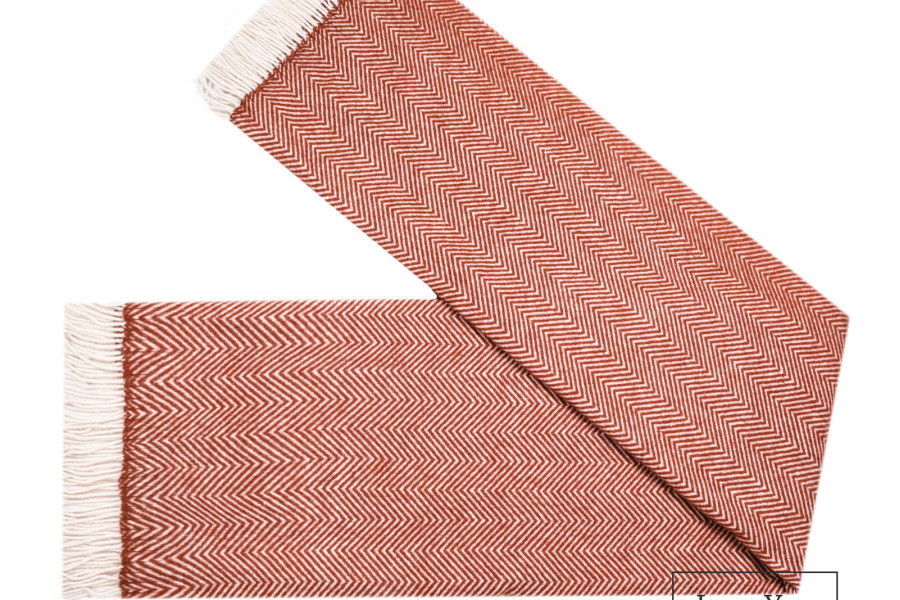
Our merino throws score one step lower and offer the most choice: three sizes, from 130 × 170 cm to 150 × 215 cm, and about 30 colourways. They are 80% merino wool and 20% nylon. The nylon strengthens the yarn; the softness comes from the merino.
Our pure new wool throws are the warmest we make, with a crisp, sturdy feel, but the fibre is coarser and can feel scratchy on bare skin. We would put one over a duvet, on the back of the sofa or over clothes rather than under your chin. If you would rather avoid wool altogether, the cotton-blend throws are soft, less warm and can be hand washed at 30 °C.
How to choose a wool throw that isn't itchy
- Read the composition, not the product name. Look for merino or cashmere with a percentage. "Wool" or "pure new wool" on its own tells you nothing about fineness.
- Check what the rest is. A cashmere blend is only as soft as the fibre that makes up the rest of it. Ours is 90% merino and 10% cashmere, a fine wool.
- Test on your neck or inner wrist. Fingertips are poor judges of prickle. Hold the throw against the side of your neck for a few seconds, or drape it over a bare forearm.
- Think about how you will use it. For bare legs on the sofa, choose softness first. For the foot of the bed or over clothes, a coarser, warmer wool is fine.
- Don't expect a scratchy throw to turn soft. A new throw may feel a little gentler once loose fibres have come away in the first weeks, but the fibre itself doesn't get any finer.
- Buy where you can send it back. You can return our throws within 30 days; return postage is yours unless the throw arrived wrong or damaged. The details are on our returns page.
Tips if your wool throw feels scratchy
If a throw you already own prickles, you don't have to give up on it. A layer of cotton between you and the wool solves most of the problem:
- Wear a long-sleeved cotton top or pyjamas when you curl up under it.
- On a bed, lay the wool throw over the duvet rather than directly against you. If your bed is made up with a sheet and blankets, turn the top of the sheet down over the wool so that cotton meets your neck.
- On the sofa, put a cotton or cotton-blend throw underneath and the wool one on top: the wool adds the warmth, the cotton takes the contact.
- Keep a coarser throw where it is least noticed: across the foot of the bed, over the back of the sofa or over your knees on top of jeans.
Online tips for softening scratchy wool usually involve soaking it, often in hair conditioner. All our wool throws, including the merino and cashmere-merino ones, are labelled do not wash, so please don't try that on them: air them instead, and have them dry cleaned (solvent P) when needed. For washable woollens, the item's own label decides, and our guide on how to wash a wool blanket explains the careful way to do it.
FAQ
Is merino wool itchy?
Not for most people. Merino fibres are fine enough to bend against the skin. If you do feel a light prickle from merino, our cashmere-merino throw (90% merino wool, 10% cashmere) is the softer choice.
Is cashmere less itchy than merino?
Cashmere fibres are generally finer than merino, so a cashmere blend feels softer still. Our cashmere-merino throw, 90% merino wool and 10% cashmere, scores 5 out of 5 for softness on our scale, against 4 for merino.
Is pure new wool itchy?
It can be. "Pure new wool" tells you the wool is new, not how fine it is. Ours is 100% New Zealand wool, the warmest throw we make, and its coarser fibre can feel scratchy on bare skin.
Will a scratchy wool throw get softer?
Only a little. Loose fibres come away in the first weeks, but the fibre itself stays the same thickness. If it prickles, put a cotton layer between you and the wool.