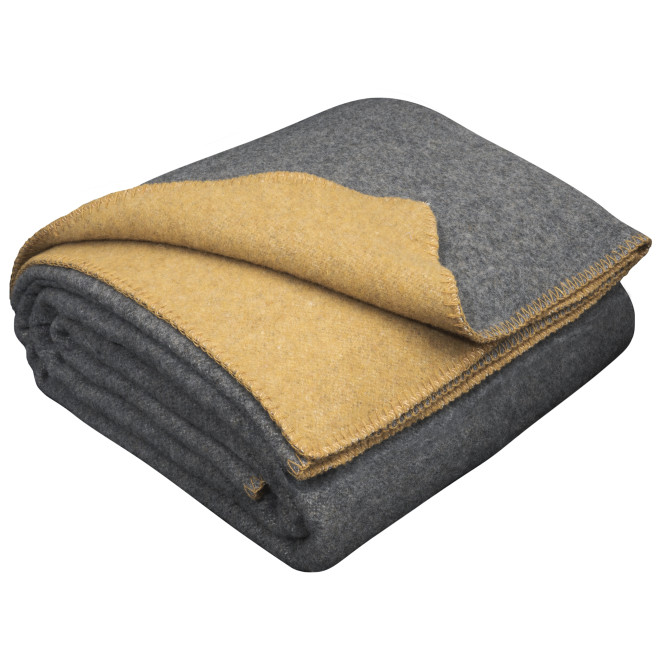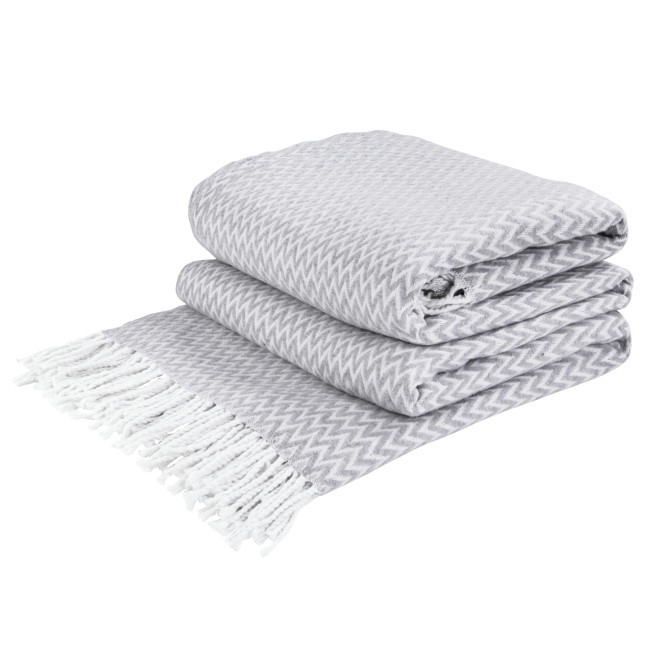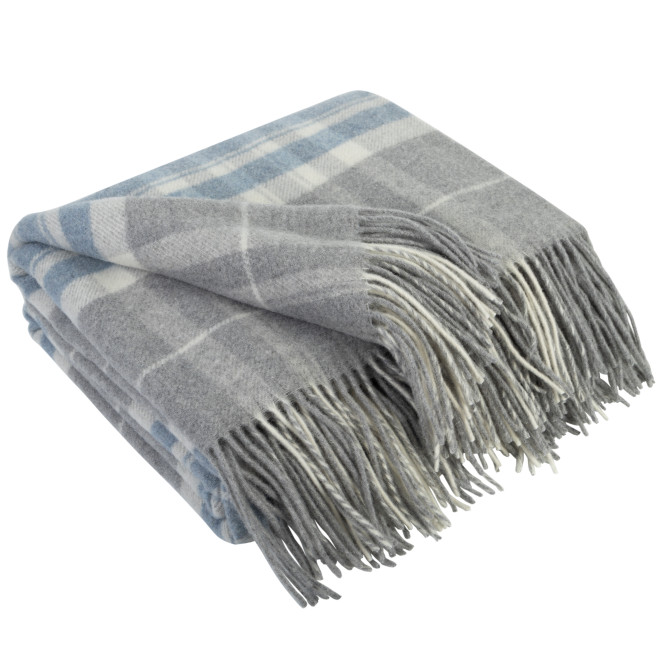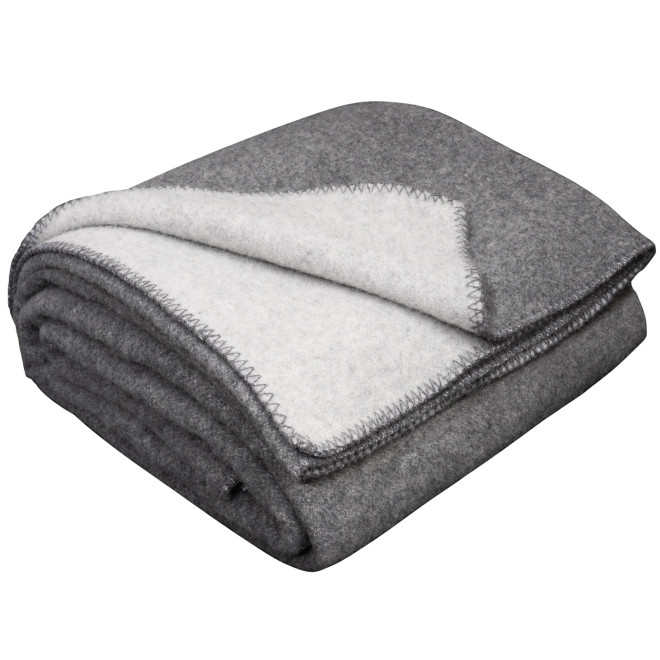
If softness against bare skin matters most, choose cashmere or a cashmere blend. If you want a soft, warm throw that copes with everyday use at a sensible price, choose merino. Lambswool is a warm, traditional choice too, but it is usually a little coarser than merino, and how soft it feels depends on the breed of sheep it came from.
The three names do not describe the same kind of thing. Lambswool tells you the age of the sheep, merino tells you the breed, and cashmere comes from a different animal altogether, the cashmere goat. We do not make lambswool throws: our wool throws are merino, cashmere-merino (90% merino wool, 10% cashmere) and pure new wool, all woven in our own mill in Ukraine. What follows about lambswool is general fibre knowledge, not a sales pitch.
Three names, three different things
- Lambswool is wool from a lamb's first shearing, usually at around seven months old. Those fibres have never been cut, so their tips are fine and tapered, which is why lambswool feels softer than wool from later shearings of the same sheep.
- Merino is fine wool from merino sheep, a breed whose wool is among the finest of any sheep.
- Cashmere is the soft undercoat of cashmere goats, combed out in spring when the animals shed their winter coat. It is very fine, and each goat gives only a small amount a year, which is why it is costly.
The names can overlap. "Merino lambswool" means wool from a merino lamb's first shearing, so it is both. A label that says only "lambswool" does not tell you the breed, and lambswool from a coarser breed, while softer than that breed's adult wool, is generally coarser than merino.
You will also see "pure new wool". It means the wool has not been used in a product before, so it is not recycled. It says nothing about how fine the fibre is.
Lambswool vs merino
Softness: merino usually comes out ahead. Its fibres are finer, and fine fibres bend away when they meet the skin instead of prickling. Lambswool's tapered tips give it a soft handle, but the breed sets the limit: lambswool from a coarse breed stays coarser than merino.
Warmth: there is less between them than you might expect. Both are wool, both trap still air in their crimped fibres, and both take up moisture without feeling clammy. How warm a throw feels depends more on how thick and densely woven it is than on which wool went into it.
Feel: lambswool is soft and springy; merino is smoother and drapes well, so it sits neatly over the arm of a sofa or the end of a bed.
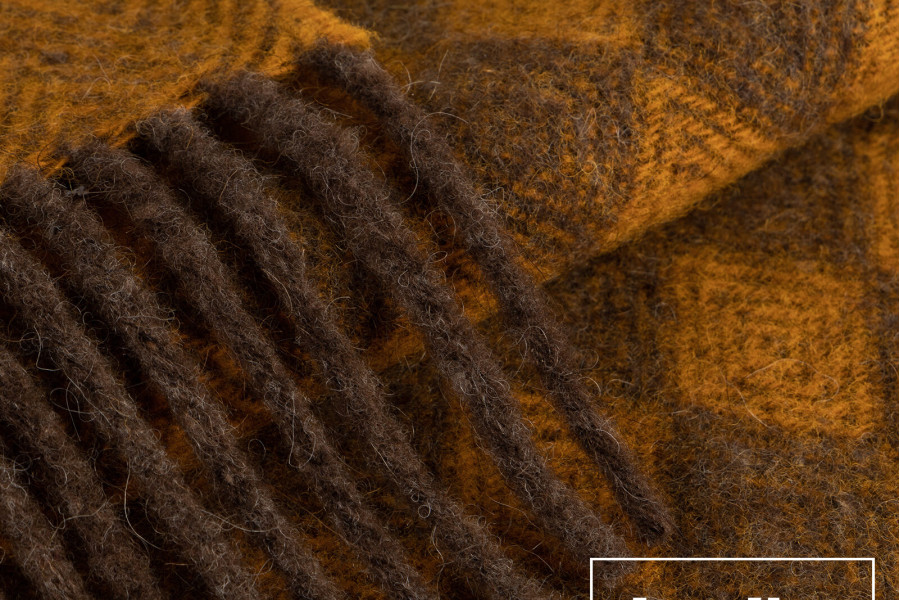
If you had lambswool in mind for its warmth and traditional character, look at our pure new wool throws: 100% New Zealand wool and the warmest throw we make (5/5 on our own scale). They are coarser, though (3/5 for softness), and can feel scratchy on bare skin. If softness was the reason, merino is the closer match.
Merino vs cashmere
Cashmere is finer than merino, feels noticeably softer and is warm for very little weight. It is also more delicate: the short, fine fibres pill more easily where they rub, and a throw of pure cashmere costs a great deal more than a merino one. Merino is the harder-wearing of the two. It springs back into shape, copes with daily use on a sofa and costs much less.
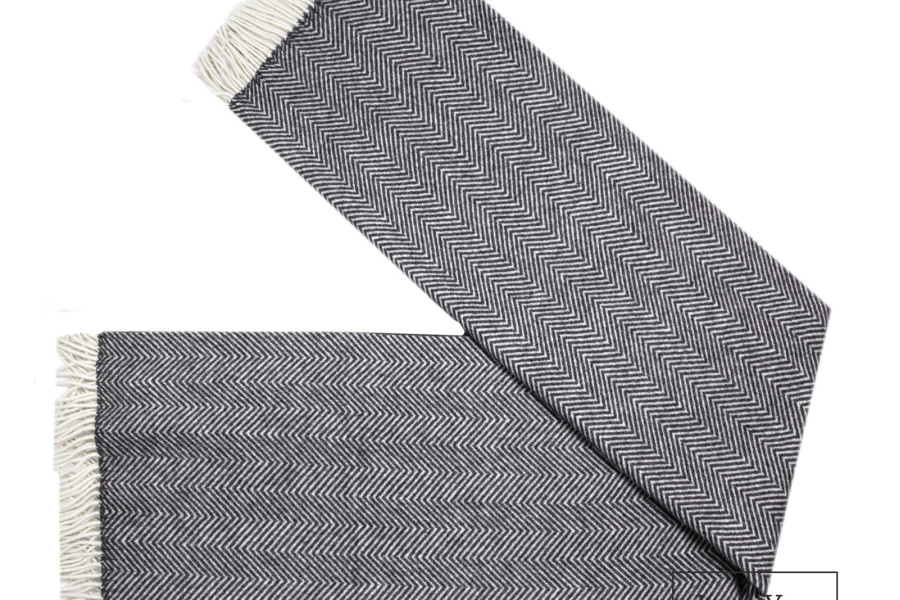
A cashmere blend sits in between. Our cashmere-merino throws are 90% merino wool and 10% cashmere. The cashmere makes the handle softer (5/5 on our own scale, against 4/5 for our merino), while the merino keeps the throw hard-wearing and the price at £84.90–89.90. It is a blend, not pure cashmere, which is why we always give the percentage. The throws measure 140 × 200 cm including 10 cm fringes, weigh 655 g and come in herringbone, stripes and tartan.
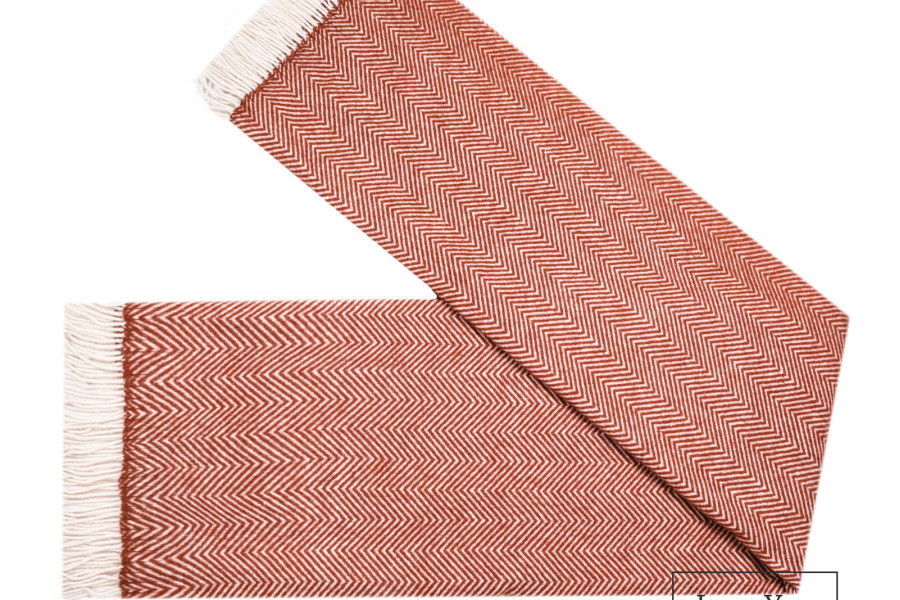
Our merino throws are 80% merino wool and 20% nylon; the nylon makes the fabric stronger and helps it keep its shape. They come in three sizes, 130 × 170, 140 × 200 and 150 × 215 cm, and in about 30 colourways, from £49.90.
Side by side: softness, warmth, care and price
| Lambswool | Merino | Cashmere | |
|---|---|---|---|
| What it is | A lamb's first shearing, any breed | Fine wool of the merino sheep | Undercoat of the cashmere goat |
| Softness | Soft; depends on the breed | Soft, hardly itches | Very soft |
| Warmth | Warm | Warm | Warm for very little weight |
| Care | Mostly airing; follow the label | Mostly airing; follow the label | Airing and gentle handling, as it pills more easily; follow the label |
| Typical price level | Medium | Medium to high | High |
| At LYHome | Not in our range | 80% merino, 20% nylon, from £49.90 | Cashmere-merino, 10% cashmere, £84.90–89.90 |
All three need the same basic care: regular airing, spills blotted straight away, and washing only when, and as, the label allows. Our merino and cashmere-merino (10% cashmere) throws are labelled do not wash; air them outdoors for a few hours, out of direct sun and rain, or have them dry cleaned.
Which throw should you buy?
- For bare skin and long evenings: the cashmere-merino throw (10% cashmere), the softest we make.
- For every day, on the sofa or the bed: merino, soft and hard-wearing, in three sizes up to 150 × 215 cm.
- For the most warmth: pure new wool, the warmest in our range but coarser, so lay it over bedding or clothes.
- If you have your heart set on lambswool: check the label for the breed. Merino lambswool will be softer than lambswool from a coarser breed.
- As a gift: merino in a colour you know they like, or the cashmere-merino (10% cashmere) if softness is the point.
-
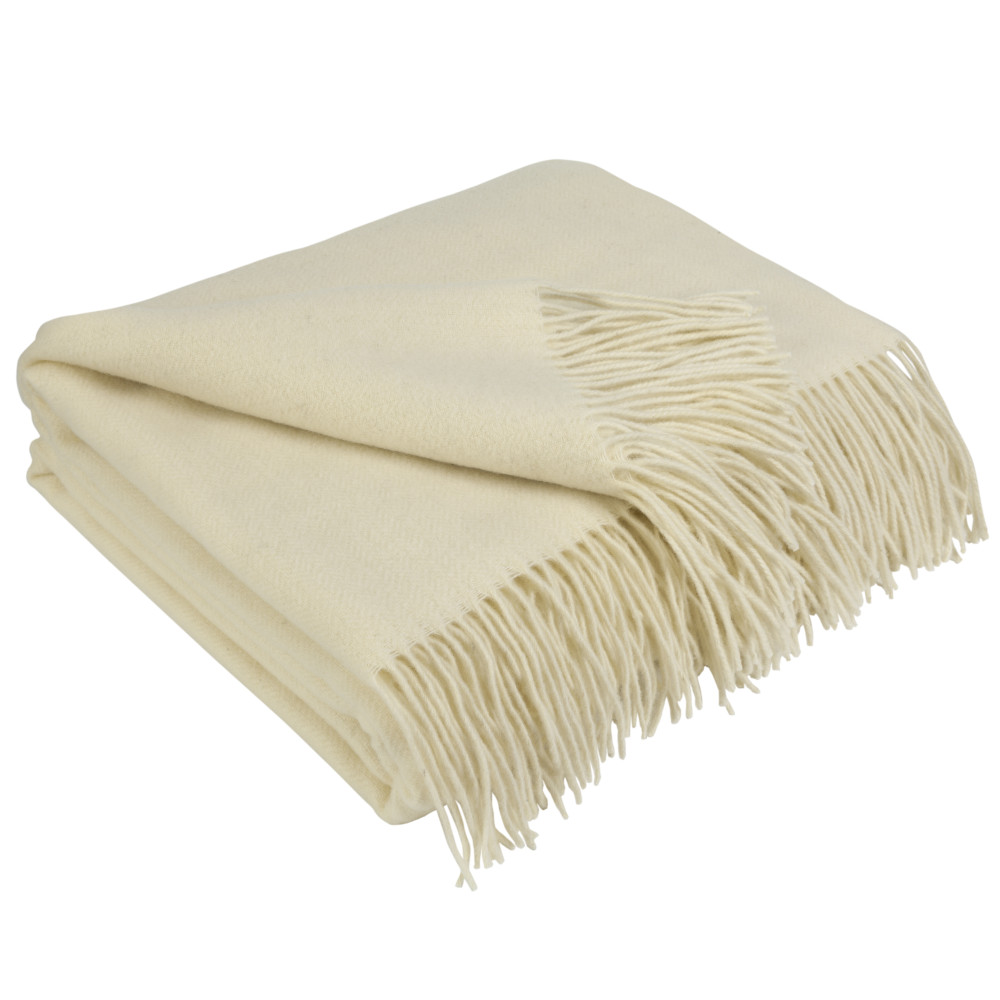 Cashmere blend
90% wool (merino), 10% cashmere
Warmth
Softness
Weight655 g CareAir it or dry-clean
For long evenings on the sofa
from £84.90 · 13 colourways
Discover
Cashmere blend
90% wool (merino), 10% cashmere
Warmth
Softness
Weight655 g CareAir it or dry-clean
For long evenings on the sofa
from £84.90 · 13 colourways
Discover
-
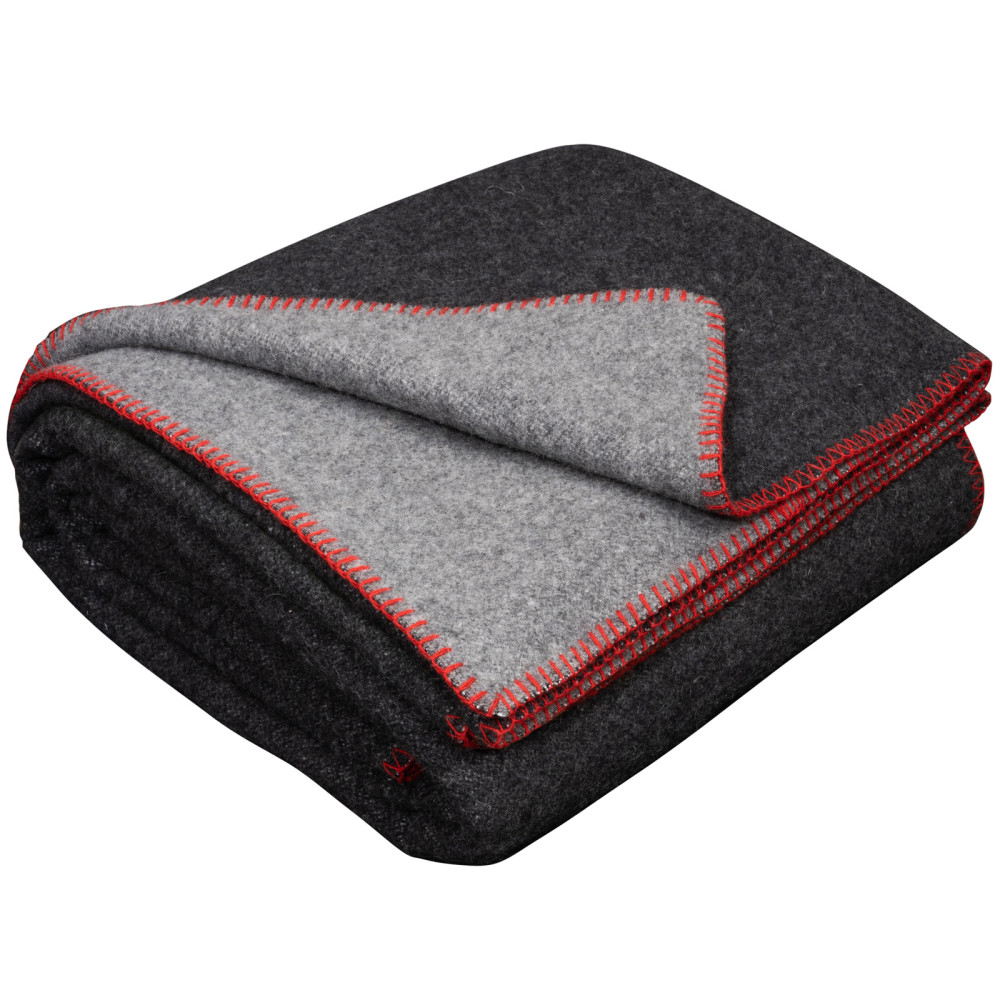 Merino wool
80% wool (merino), 20% nylon
Warmth
Softness
Weight730–1,450 g CareAir it or dry-clean
Light enough for travel and the car
from £49.90 · 30 colourways
Discover
Merino wool
80% wool (merino), 20% nylon
Warmth
Softness
Weight730–1,450 g CareAir it or dry-clean
Light enough for travel and the car
from £49.90 · 30 colourways
Discover
-
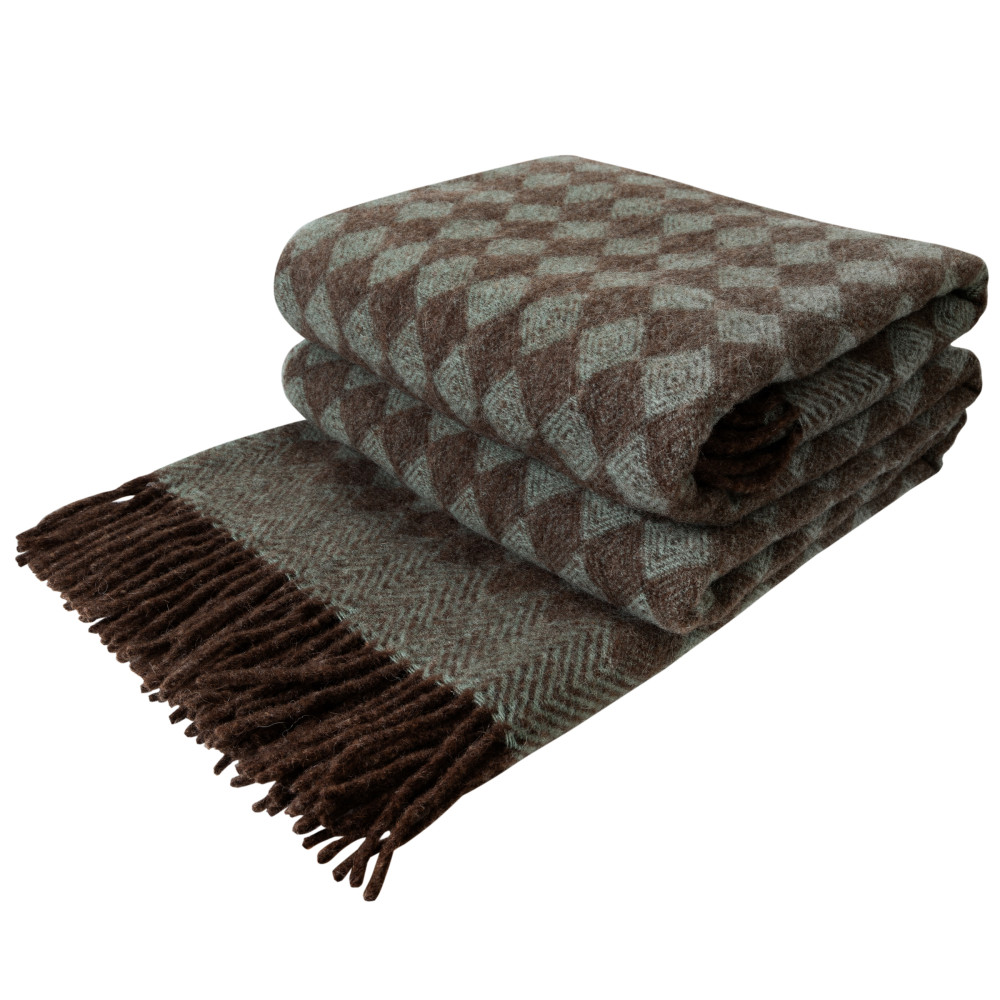 Pure new wool
100% New Zealand wool
Warmth
Softness
Weight730–890 g CareAir it or dry-clean
Hard-wearing and winter-warm
from £49.90 · 2 colourways
Discover
Pure new wool
100% New Zealand wool
Warmth
Softness
Weight730–890 g CareAir it or dry-clean
Hard-wearing and winter-warm
from £49.90 · 2 colourways
Discover
-
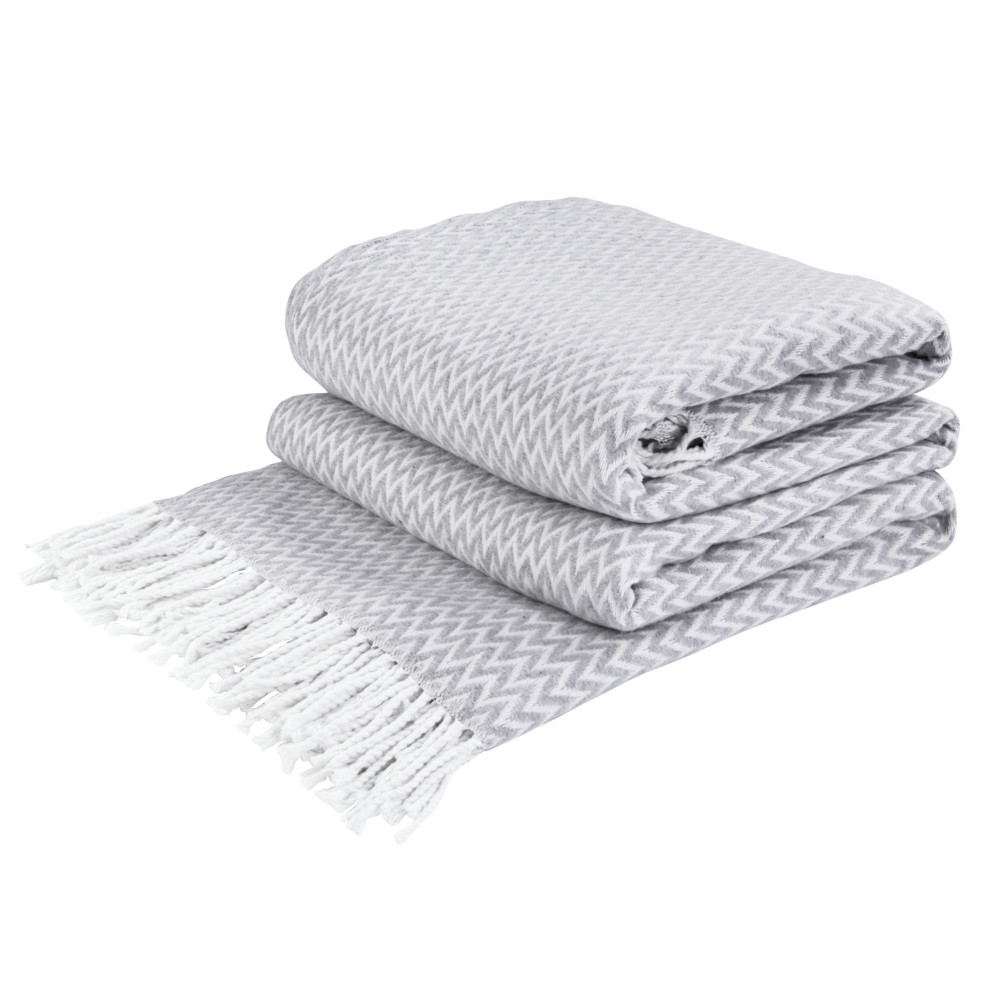 Cotton
50% cotton, 30% polyester, 20% acrylic
Warmth
Softness
Weight940–950 g CareHand wash at 30 °C
For every season, breathable
from £21.90 · 32 colourways
Discover
Cotton
50% cotton, 30% polyester, 20% acrylic
Warmth
Softness
Weight940–950 g CareHand wash at 30 °C
For every season, breathable
from £21.90 · 32 colourways
Discover
How fibre fineness is measured, and why some wool itches, is explained in our article Merino, cashmere or pure new wool?
FAQ
Is lambswool softer than merino?
Usually not. Lambswool is softer than adult wool from the same breed, but merino fibres are finer, so a merino throw generally feels softer than one made from ordinary lambswool. Merino lambswool combines the two.
Is merino as warm as cashmere?
Cashmere is warm for very little weight, but in a throw the thickness and density of the weave matter more than the fibre. On our own scale, our merino and cashmere-merino (10% cashmere) throws both rate 4/5 for warmth.
Is a 10% cashmere blend worth it?
If softness is what you are after, that is the difference you will notice: 5/5 on our scale against 4/5 for merino. Warmth is the same and the price is higher (£84.90–89.90, against merino from £49.90), so if warmth is all you want, merino or pure new wool makes more sense.
Is merino wool itchy?
Rarely. Merino fibres are fine enough to bend when they touch the skin instead of prickling. If you find all wool scratchy, our cashmere-merino (10% cashmere) is softer still.