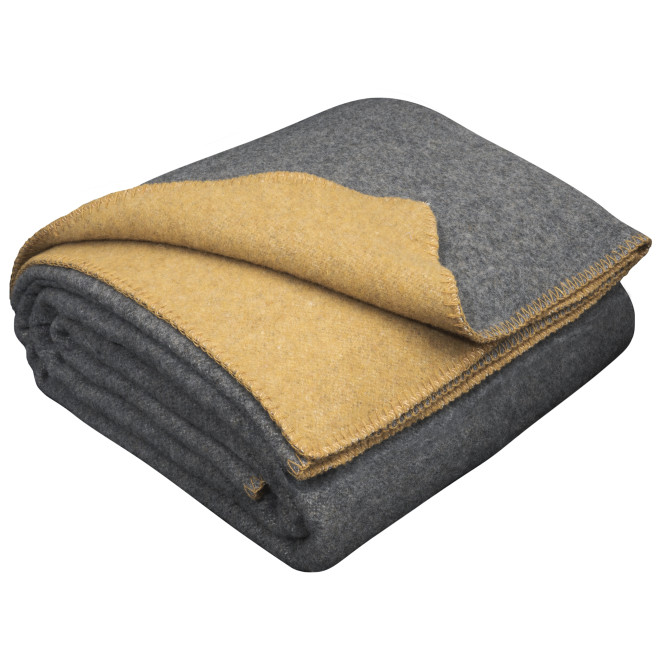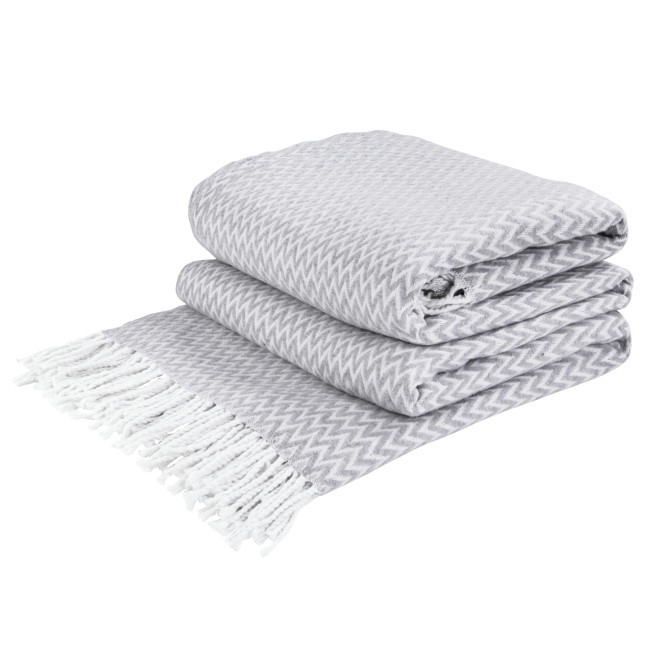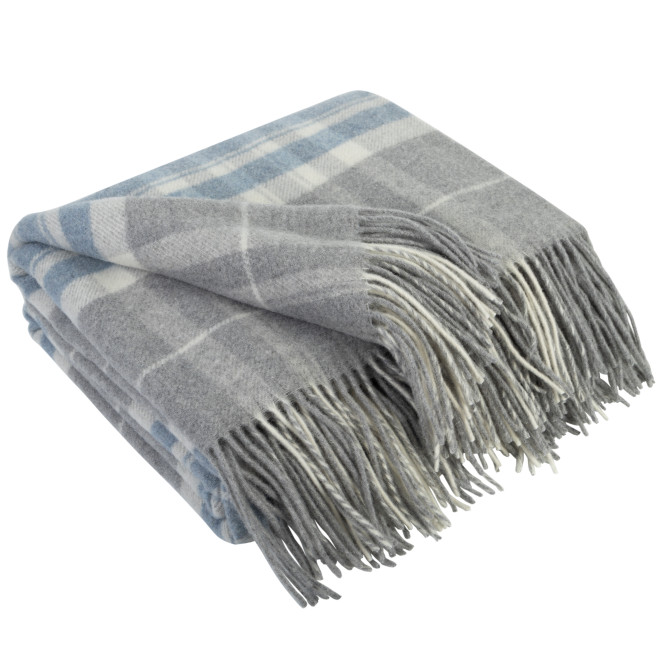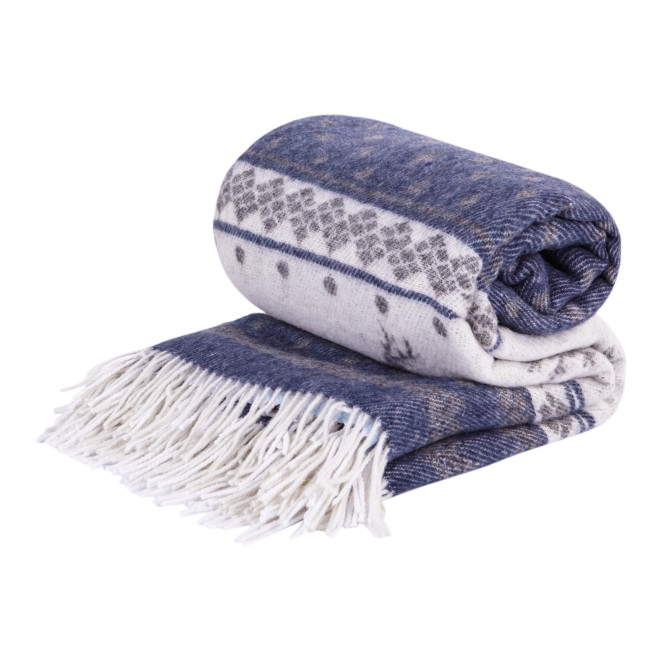
For the most warmth at the lowest weight, choose a down duvet: down holds more still air per gram than any blanket fabric. For a blanket or throw you use on its own or as an extra layer, heavy wool is the warmest common choice, and it stays comfortable over a wider range of temperatures, because wool takes up moisture vapour instead of leaving you clammy. Fleece is warm, light and cheap, but polyester absorbs almost no moisture, so it can feel sticky once you warm up.
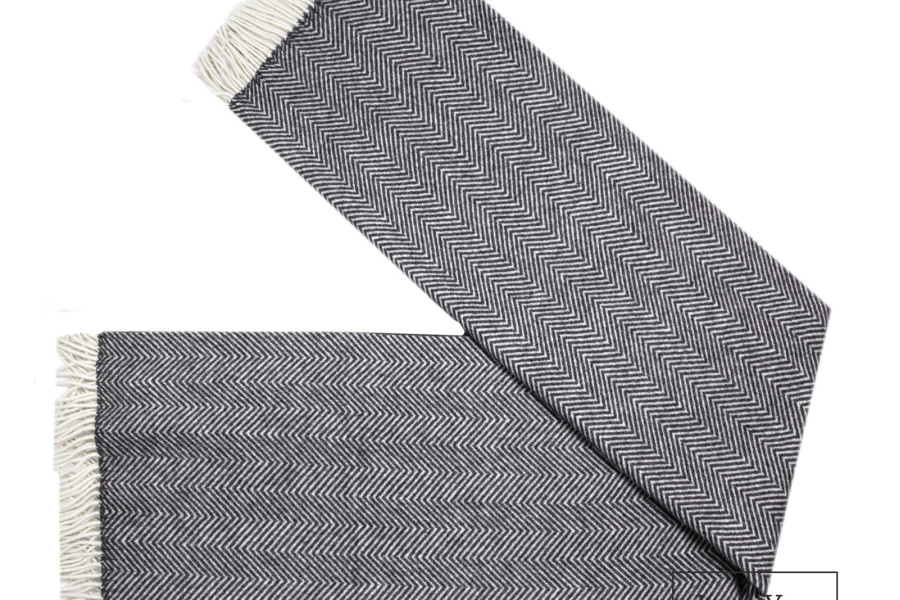
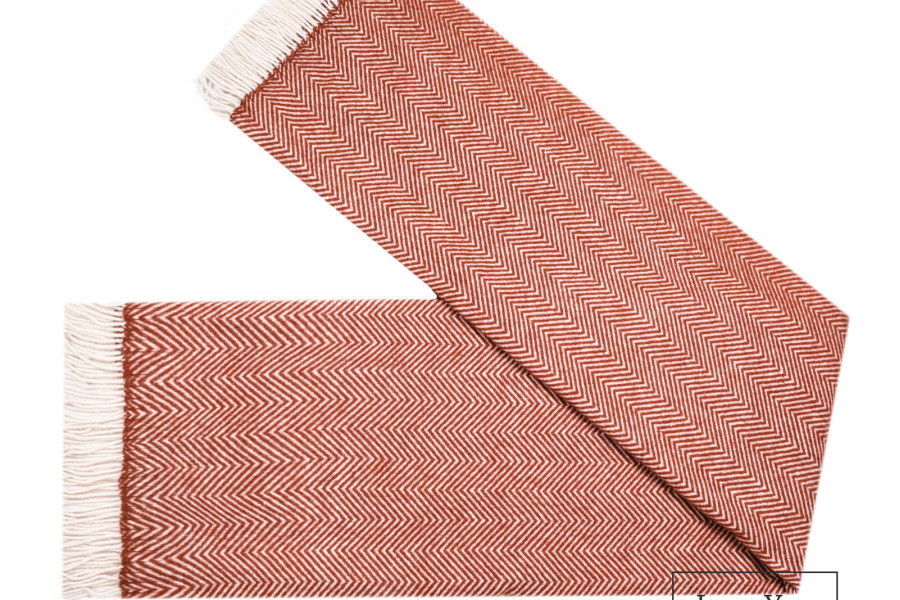
In our own range, the warmest throws are pure new wool (100% New Zealand wool), rated 5 out of 5 on our warmth scale. Next come our merino throws at 4 out of 5, from £49.90. For cold nights, the double-sided 150 × 215 cm merino throw is the heaviest we make, at 1,450 g.
What makes a blanket warm
A blanket does not make heat. It slows the loss of the heat your body makes, mostly by holding still air in and between its fibres. Three things decide how well it does that:
- Loft: the more still air a blanket holds, the better it insulates. That is why fluffy down is so warm for its weight.
- Weight and density: a heavier, denser fabric keeps warm air from escaping and lies close to your body. Of two blankets in the same fibre, the heavier one is usually warmer.
- Moisture: your body gives off moisture all night. Damp insulation loses warmth, and a fibre that takes up moisture vapour keeps the air under the covers drier.
The fibre decides mostly how a blanket handles moisture, how heavy it is and how you look after it. How warm it feels from day to day comes down largely to its thickness and density. Duvets are rated in tog for that reason, while throws and blankets rarely are; our guide how many tog is a wool throw? explains why.
Wool vs fleece vs down at a glance
| Wool | Fleece | Down duvet | Cotton, for comparison | |
|---|---|---|---|---|
| Warmth | high | high | highest | low to medium |
| Warmth for its weight | good | very good | highest | low |
| Moisture | breathes; takes up moisture vapour without feeling wet | absorbs almost none; can feel clammy | breathes, but loses loft when damp | breathes; absorbs moisture but dries slowly |
| Weight | heavier | light | lightest for its warmth | medium |
| Care | airing; dry cleaning, or a careful wash if the label allows | machine wash, dries fast | large washing machine or professional cleaning, then thorough drying | machine wash |
| Typical price | medium to high | low | medium to high | low to medium |
Wool: the warmest blanket to use on its own
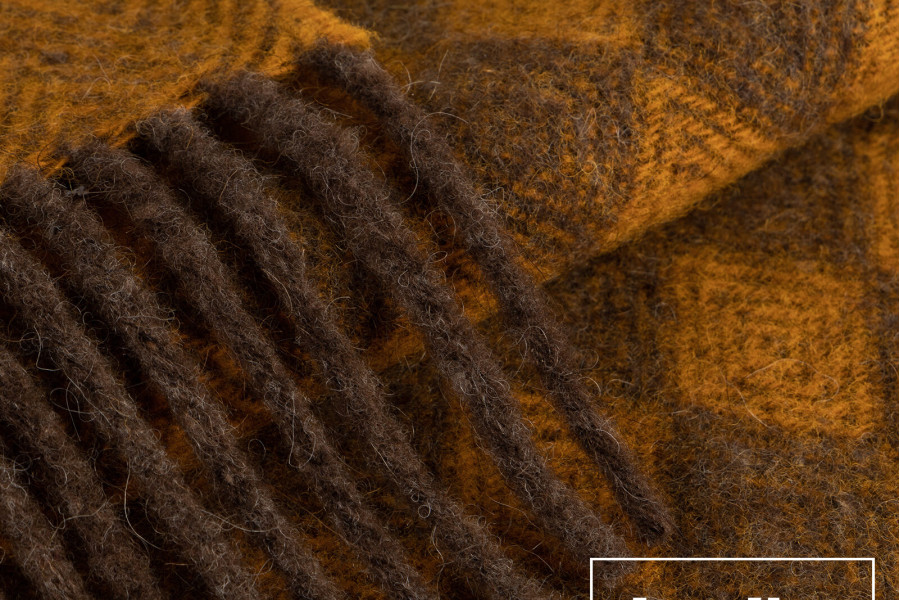
Wool fibres are crimped, so even a flat-woven wool throw holds a lot of still air. Wool can also take up moisture vapour, up to about a third of its own weight, without feeling wet. In practice, a wool blanket stays comfortable when you start to warm up instead of turning sticky, so the same throw works on a cool autumn evening and on a cold winter night. Wool hardly takes on smells, which is why it usually needs airing rather than washing.
The trade-offs: wool is heavier than fleece or down for the same warmth, it costs more than fleece, and many wool throws, ours included, are labelled do not wash. A few hours of airing outdoors, out of direct sun and rain, keeps them fresh, and a dry cleaner does the rest.
What is the warmest wool? Weight for weight, fine fibres such as merino and cashmere are especially warm, because their crimp traps a lot of air. In a blanket, though, how thick and dense it is woven matters more than the fibre's name. On our own scale, our pure new wool throws rate 5 out of 5 for warmth, and our merino and cashmere-merino (10% cashmere) throws 4 out of 5. The pure new wool is coarser and can feel scratchy on bare skin; merino is softer. Our guide to merino, cashmere and pure new wool explains the differences in detail.
Fleece: warm and cheap, but it doesn't handle moisture
Fleece is a knitted polyester fabric brushed to a soft pile. It is light, warm for its weight, inexpensive, machine washable and quick to dry. Its weak point is moisture: polyester absorbs almost none, so once you warm up under a fleece blanket, the moisture you give off stays between you and the fabric, and the blanket can start to feel clammy. Fleece also builds up static in dry winter air and tends to pill with use.
That makes fleece a fair choice for a quick cover on the sofa, a blanket for the car or anything that will be washed often. As the only warm layer on a bed, wool or down is usually more comfortable through the night.
Down, and wool vs down duvets
Down is the soft underplumage of ducks and geese. Its fluffy clusters trap more air per gram than any other common filling, so a down duvet gives the most warmth for its weight. A duvet's tog rating tells you how well it insulates: the higher the number, the warmer. Down needs a cover, loses much of its warmth if it gets damp, and can clump after washing unless it is dried thoroughly.
A wool duvet, filled with wool instead of down, is flatter and heavier and lies closer to the body. It handles moisture better, so it suits people who find down too warm but still want a warm bed. A down duvet is the choice for a very cold bedroom or for anyone who wants a light, puffy bed. You can also combine them: a down duvet on top and a wool blanket or throw underneath, where the heavier layer won't flatten the down.
A warmer bed, a cooler bedroom
Turning the heating down at night is one of the simplest ways to spend less on energy, and a warmer bed is what makes a cooler bedroom comfortable. A few ways to set it up:
- Add a wool throw as a layer you can pull up or push away during the night. Two thinner layers are easier to adjust than one heavy duvet.
- With a down duvet, put the wool layer under it, not on top.
- Keep a throw across the foot of the bed for cold feet. The 150 × 215 cm merino throw reaches across a double or king-size mattress.
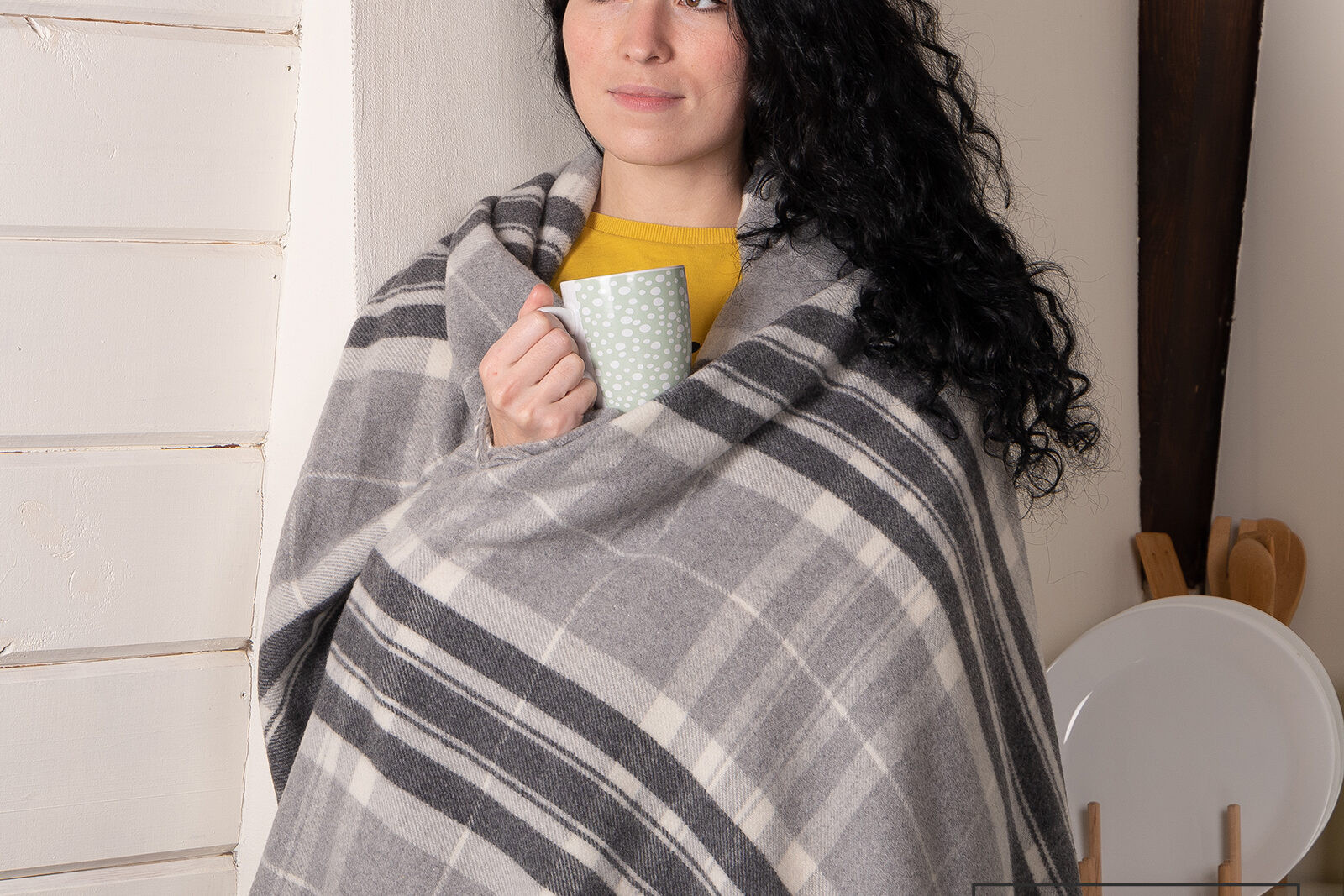
- In the evening, a throw over your legs on the sofa keeps you comfortable in a cooler living room. Our comparison of a wool throw or a heated throw shows how to work out what a heated throw costs to run.
Our merino throws are 80% merino wool and 20% nylon, woven in our family's own mill in Ukraine. They come in 130 × 170 cm, 140 × 200 cm (including fringes) and 150 × 215 cm, from £49.90, with free delivery across the UK from our warehouse in Coventry and 30-day returns. On our own scale they rate 4 out of 5 for warmth and 4 out of 5 for softness.
FAQ
What is the warmest type of blanket?
For warmth per gram, a down duvet. For a blanket or throw used on its own, a heavy wool blanket, which also stays comfortable once you warm up.
Is wool warmer than fleece?
For the same weight, fleece is a little warmer. Wool's advantage is moisture: it takes up moisture vapour and stays comfortable as you warm up, while fleece absorbs almost none and can feel clammy.
Is a wool blanket warmer than a down duvet?
Usually not, because down gives more warmth for its weight. A wool blanket under a down duvet adds warmth without flattening the down.
What is the warmest wool for a blanket?
How thick and dense the blanket is matters more than the fibre. In our range, pure new wool rates 5 out of 5 for warmth and merino 4 out of 5 on our own scale.