Switched on, a heated throw will feel warmer than any throw without a plug, because it makes heat. A wool throw makes none: it keeps in the warmth your own body gives off by trapping still air between its crimped fibres. So if you want to warm up quickly while sitting still in a cold room, the heated throw wins. If you want warmth with no socket, no cable and no electricity, and a throw you can carry from the sofa to the bed to the garden bench, choose wool.
That is the heated throw vs wool blanket question in short, and you don't have to pick one: warm up under a heated throw, switch it off, and let wool hold the warmth in. Among our own throws, pure new wool rates 5/5 for warmth on our scale, while merino and our cashmere-merino (90% merino wool, 10% cashmere) rate 4/5. Either way, warming yourself is an addition to sensible heating, not a replacement for it.
How each one keeps you warm
A heated throw has insulated heating wires running through the fabric, connected to a controller and a wall socket. It gives out heat for as long as it is switched on, usually with a choice of settings and often with a timer that turns it off. Switched off, it is simply a throw, as warm as whatever fabric covers the wires.
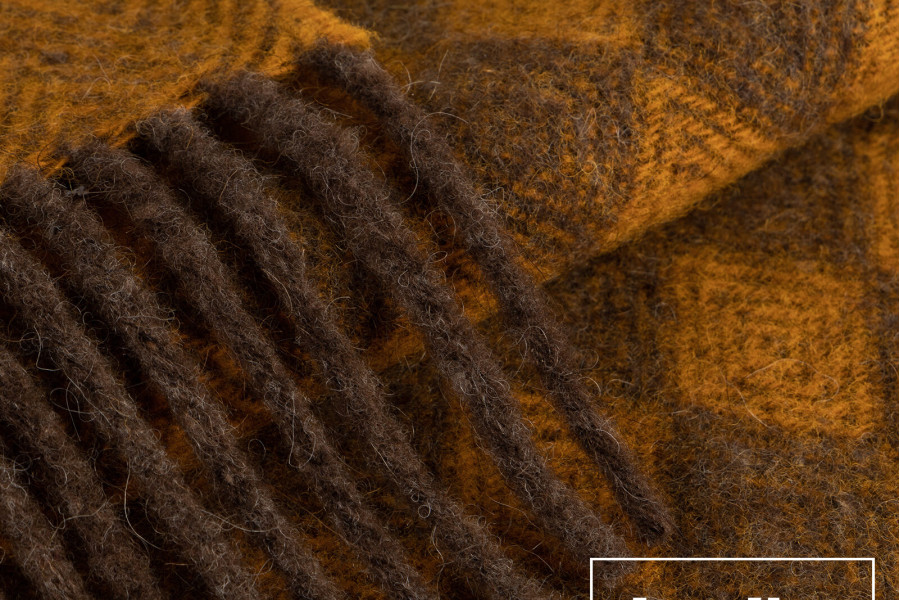
A wool throw works like a good jumper. Wool fibres are crimped, so a woven wool throw holds a lot of still air, and still air is what insulates. The warmth you feel is your own, kept in rather than lost to the room. Wool also takes up moisture vapour without feeling clammy, so it stays comfortable when you have been under it for a whole film. How warm a wool throw feels depends mostly on how thick and dense it is, which is why weight is a useful guide: our largest merino throw, 150 × 215 cm, weighs 1,450 g.
Heated throw vs wool throw at a glance
| Heated throw | Wool throw | |
|---|---|---|
| Heat comes from | Electric wires in the fabric | Your own body, kept in by the wool |
| Electricity | Uses power whenever it is switched on | None |
| From cold | Warms you up | Keeps warmth in; won't warm a cold bed or sofa by itself |
| Where you can use it | Within reach of a socket | Anywhere: sofa, bed, car, garden |
| Safety | Follow the maker's instructions; check the cable, plug and controller | Nothing electrical to check |
| Care | As its label says; where washing is allowed, the controller comes off first | Ours: air it outdoors or have it dry cleaned |
| Lifespan | Limited by the wiring and controller; replace it when the maker advises or if it is damaged | No electrical parts; kept clean, dry and away from moths, it can last for many winters |
What a heated throw costs to run
A heated throw uses electricity only while it is on, and how much depends on its power rating and the setting you choose. You can work out the cost yourself in a minute:
- Find the power rating in watts (W), printed on the label or in the manual.
- Divide it by 1,000 and multiply by the hours you use it. That gives kilowatt hours (kWh), the unit on your energy bill.
- Multiply the kWh by the unit rate on your bill.
The rating on the label is the most the throw draws, on its highest setting. On lower settings it uses less, so your sum gives you the upper limit. A wool throw needs no sum at all: it uses no electricity.
"Heat the person, not the home" is the idea behind both. Warming the person on the sofa rather than every room in the house makes sense, within reason. The NHS advises keeping the rooms you spend time in warm, particularly for older people and anyone with a long-term health condition, so a throw belongs on top of sensible heating rather than instead of it.
Safety and care
Use any electric blanket or heated throw exactly as its maker's instructions say; they differ from model to model. A few habits apply to all of them:
- Before each winter, check the cable, plug and controller, and stop using the throw if anything looks worn, scorched or damaged.
- Don't use it when it is wet or damp, and after washing let it dry completely before you plug it in.
- Check what the instructions say about folding it, or covering it, while it is switched on.
- Wash it only as the label allows, with the controller unplugged and removed.
- Replace it when the maker advises, or straight away if it is damaged.
A wool throw asks for less. Our merino and cashmere-merino throws carry a "do not wash" label: air them outdoors for a few hours, out of direct sun and rain, or have them dry cleaned (solvent P) when they need more than fresh air. If you decide to wash wool at home anyway, our guide to washing a wool blanket explains how to do it gently on a wool programme, at your own risk. Stored clean and dry over the summer, where moths can't get at it, a wool throw has nothing in it to wear out but the wool itself.
Which of our throws is the warmest
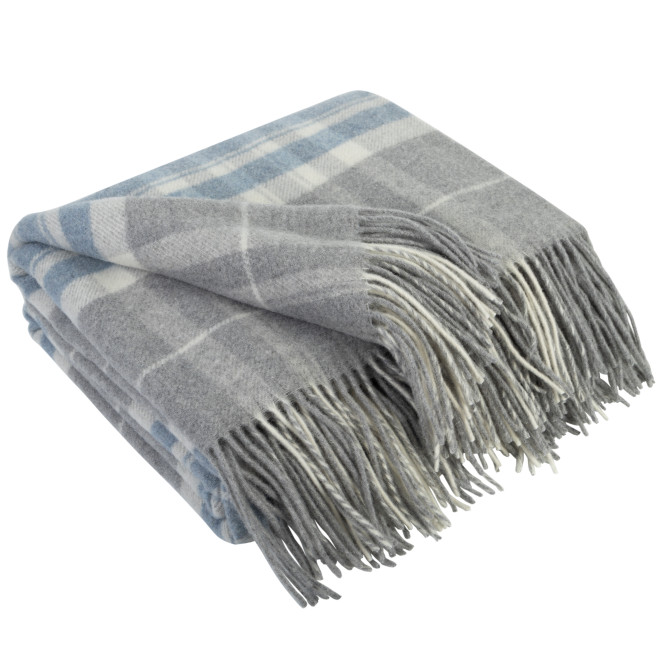
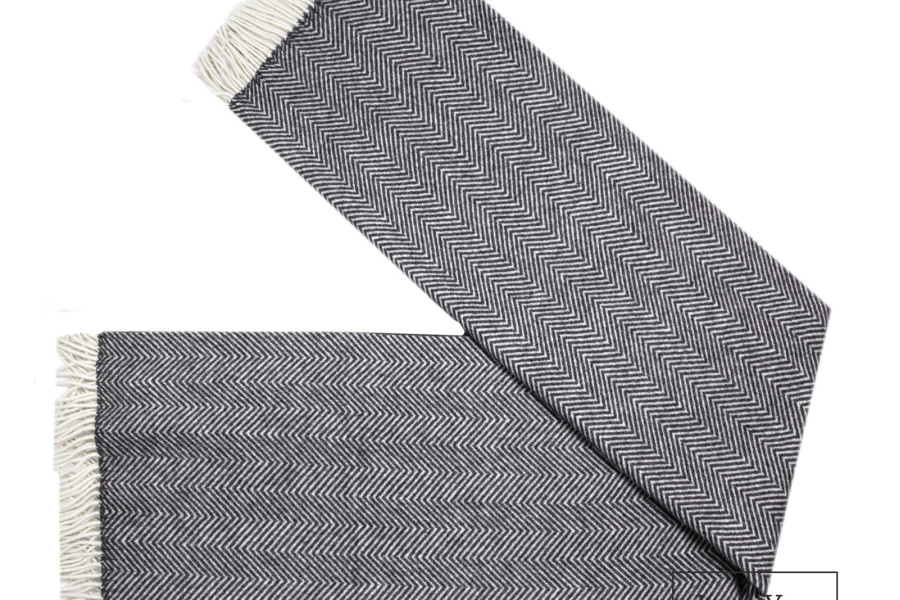
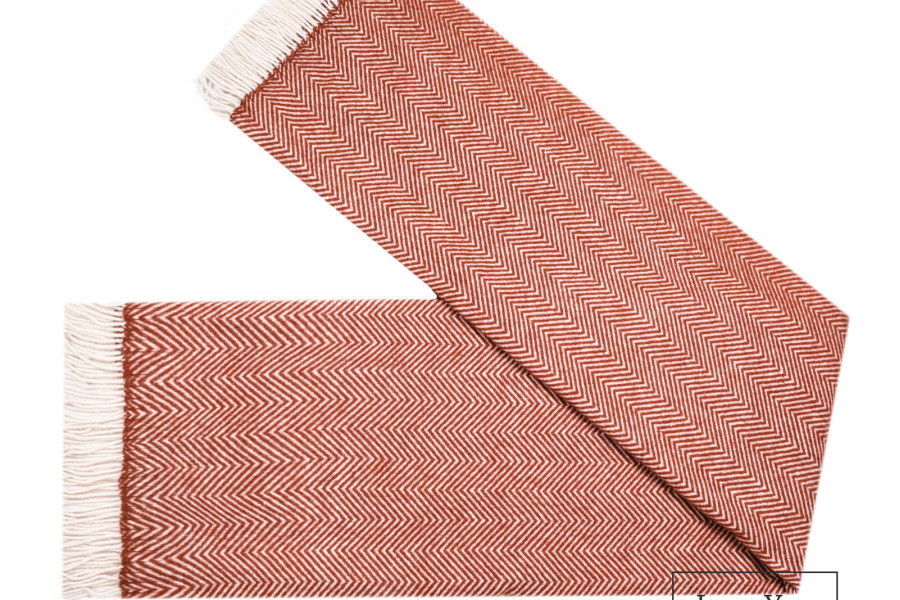
We rate our throws on our own five-point scale. For warmth, pure new wool comes first, merino and cashmere-merino next, and the cotton-blend after them.
| Throw | Made of | Warmth | Softness |
|---|---|---|---|
| Pure new wool | 100% New Zealand wool | 5/5 | 3/5 |
| Merino | 80% merino wool, 20% nylon | 4/5 | 4/5 |
| Cashmere-merino | 90% merino wool, 10% cashmere | 4/5 | 5/5 |
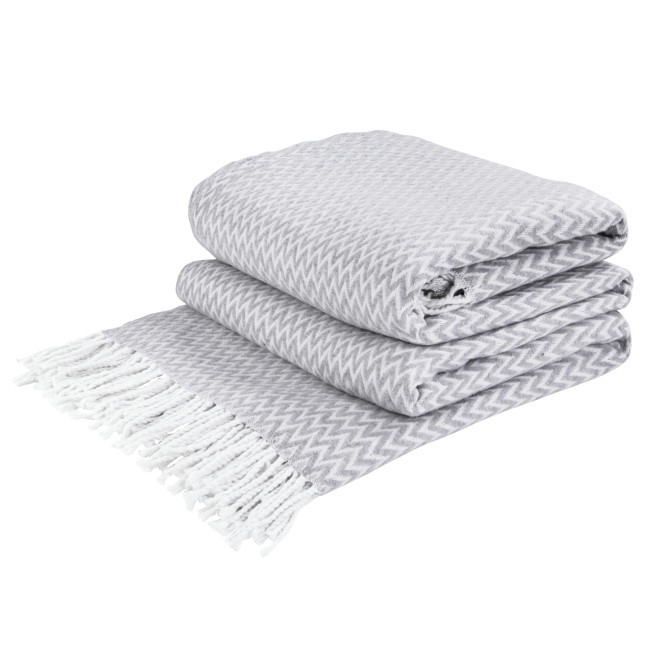
| Cotton-blend | 50% cotton, 30% polyester, 20% acrylic | 3/5 | 4/5 |
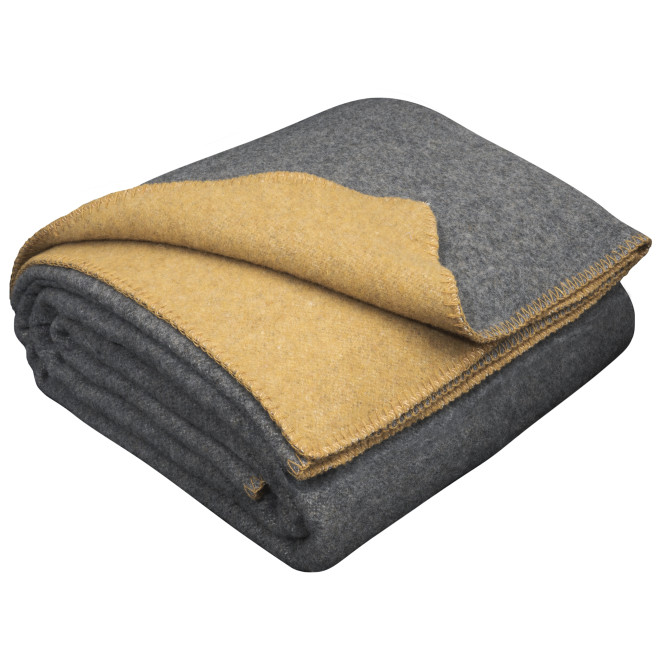
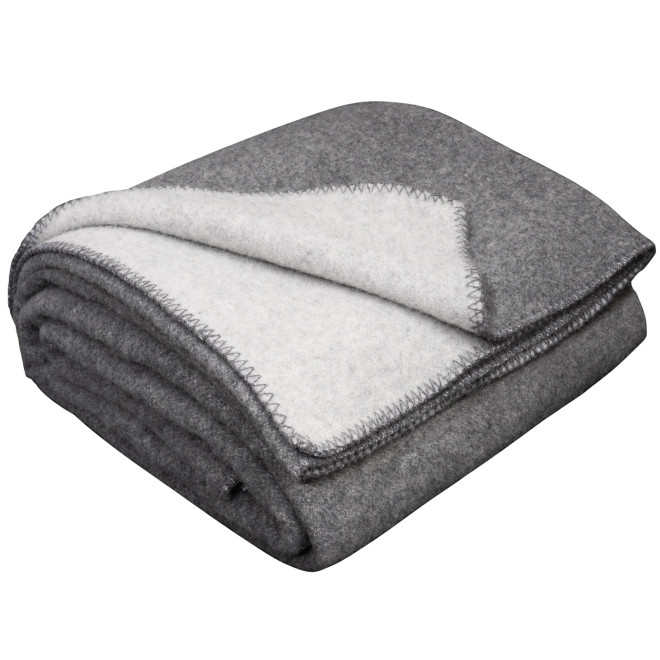
Pure new wool is the warmest, but its coarser fibre can feel scratchy on bare skin, and it is sold out in our UK shop at the moment. Of the throws in stock, merino is the warm choice: soft enough to pull up to your chin and available in three sizes, from £49.90. For the most warmth, take the 150 × 215 cm double-sided merino throw, which at 1,450 g is the heaviest we make. If softness matters as much as warmth, our cashmere-merino throws (90% merino wool, 10% cashmere, £84.90–89.90) are just as warm on our scale and the softest in the range, though only a few are in stock.
How to layer for warmth
- Dress first. Socks and a jumper keep warmth close to you; the throw works on top of them.
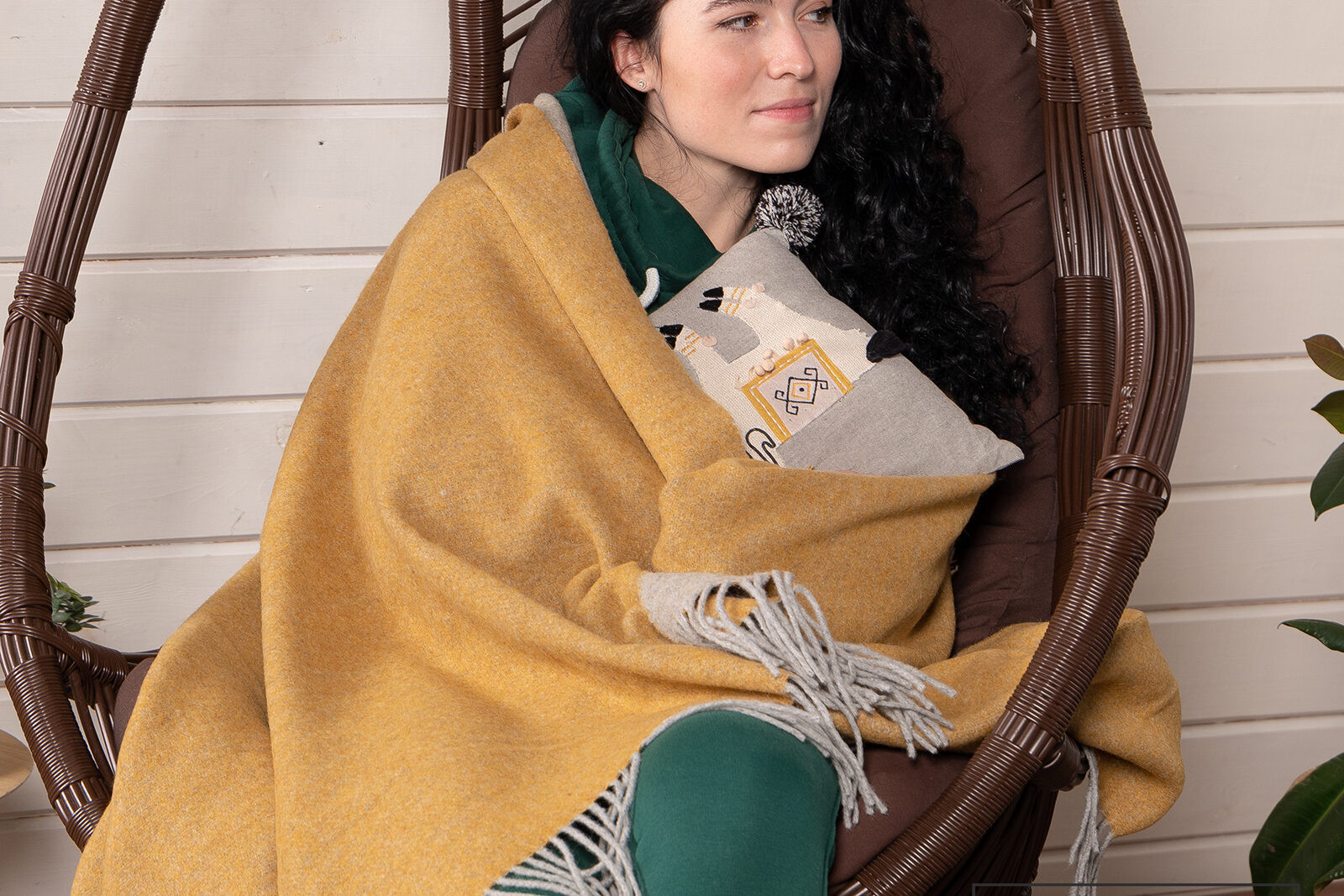
- Wrap rather than drape. Warm air escapes through gaps, so tuck the throw under your feet and close it at the neck.
- Fold it double over your legs. Two layers trap more still air than one, and a 150 × 215 cm throw folded in half still covers a lap with room to spare.
- Block the cold side. If the sofa stands against an outside wall or under a draughty window, hang a throw over the back, between you and the cold.
- In bed, spread the throw over the duvet on the side of whoever feels the cold, or fold it across the foot of the bed.
- With a heated throw, warm up under it, switch it off, then add the wool. Don't put anything on top of a heated throw while it is on unless its instructions say you can.
FAQ
What is the warmest blanket?
While it is switched on, a heated throw or electric blanket, because it makes heat. Without a plug, a thick, dense wool throw keeps warmth in very well. In our range, pure new wool rates 5/5 for warmth and merino 4/5.
Is a wool throw a good electric blanket alternative?
It does a different job. A wool throw won't warm a cold bed before you get in, but once you are in, spread over the duvet it keeps in the warmth you make yourself, with no cable, controller or electricity.
Can I put a wool throw over a heated throw?
Check the heated throw's instructions first. The simple way is to warm up under the heated throw, switch it off, then use the wool throw on top.
Is merino itchy?
Merino is a fine wool that feels soft rather than prickly; our merino throws rate 4/5 for softness. Pure new wool is coarser and can feel scratchy on bare skin.