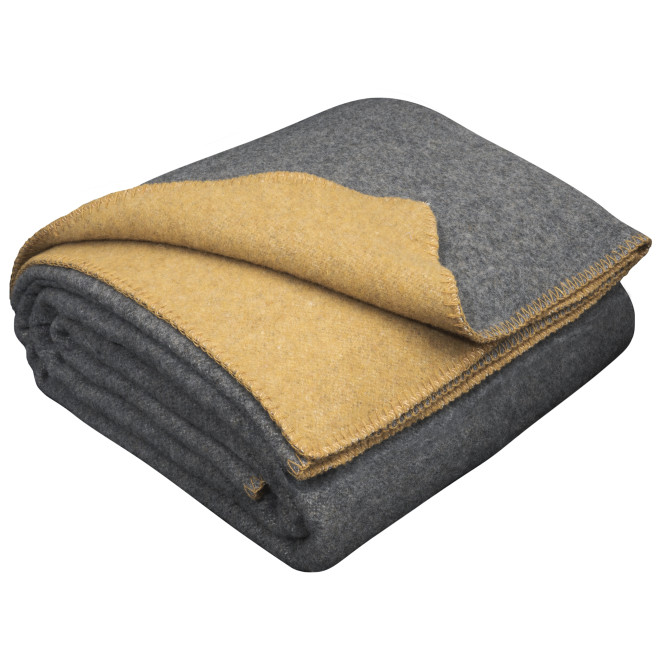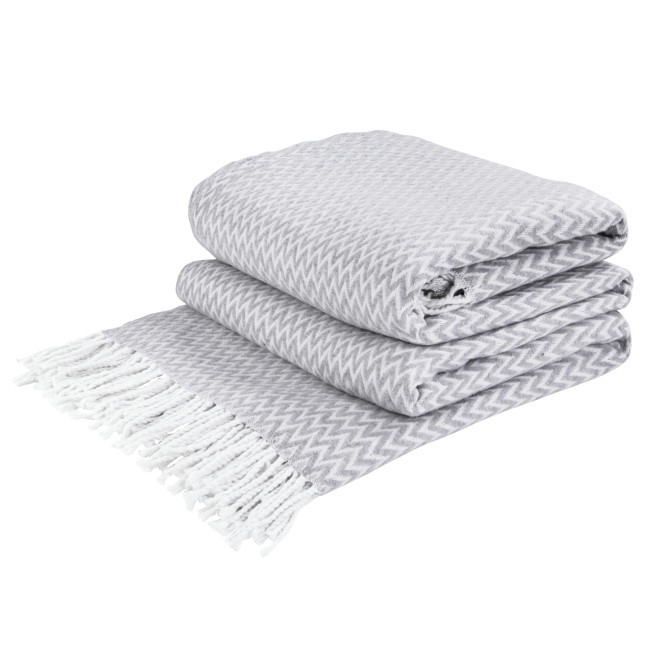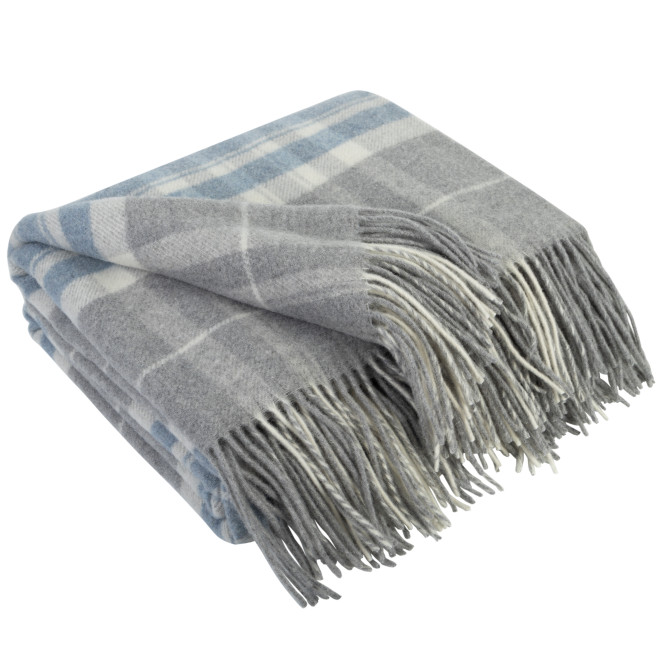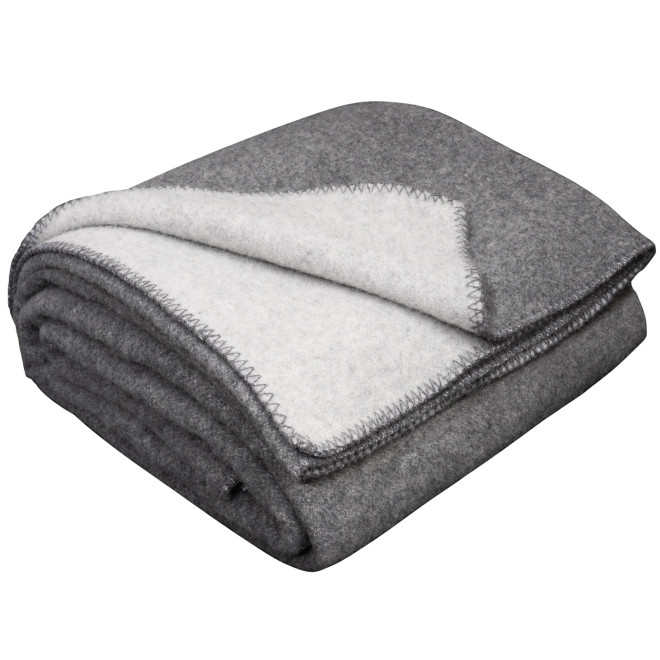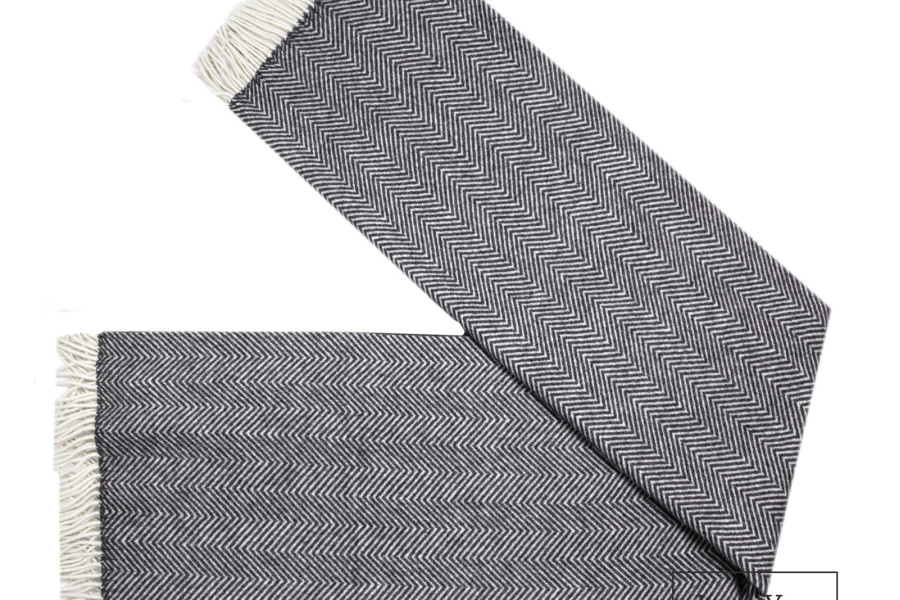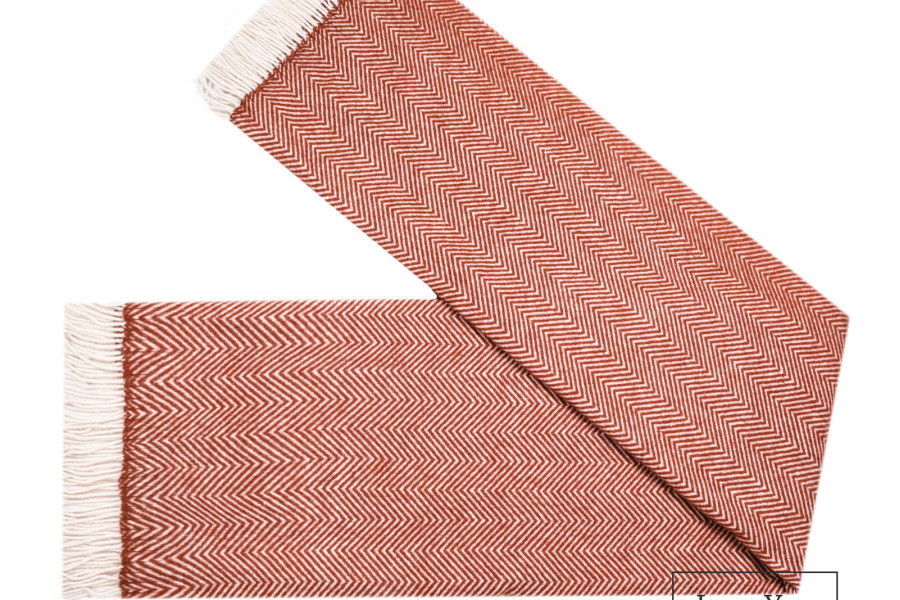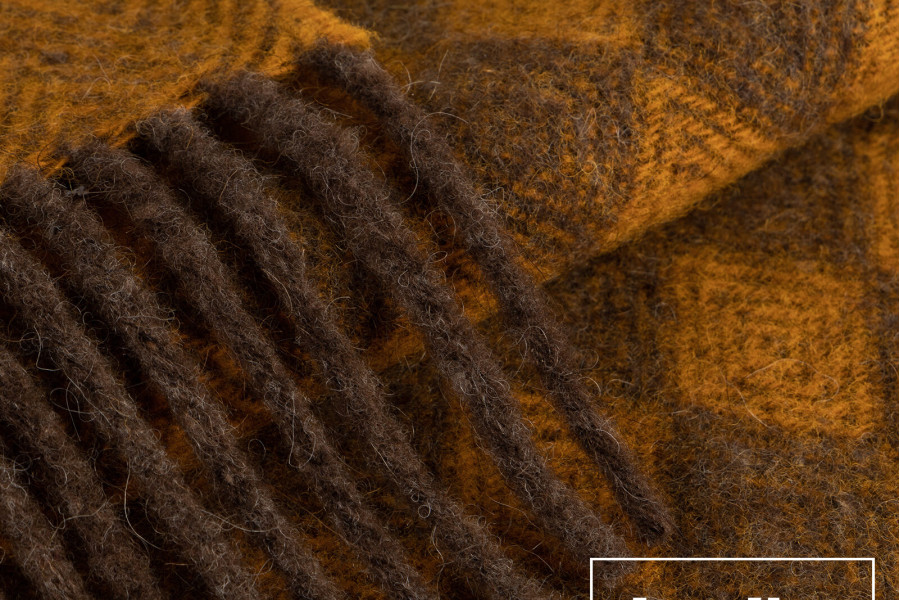
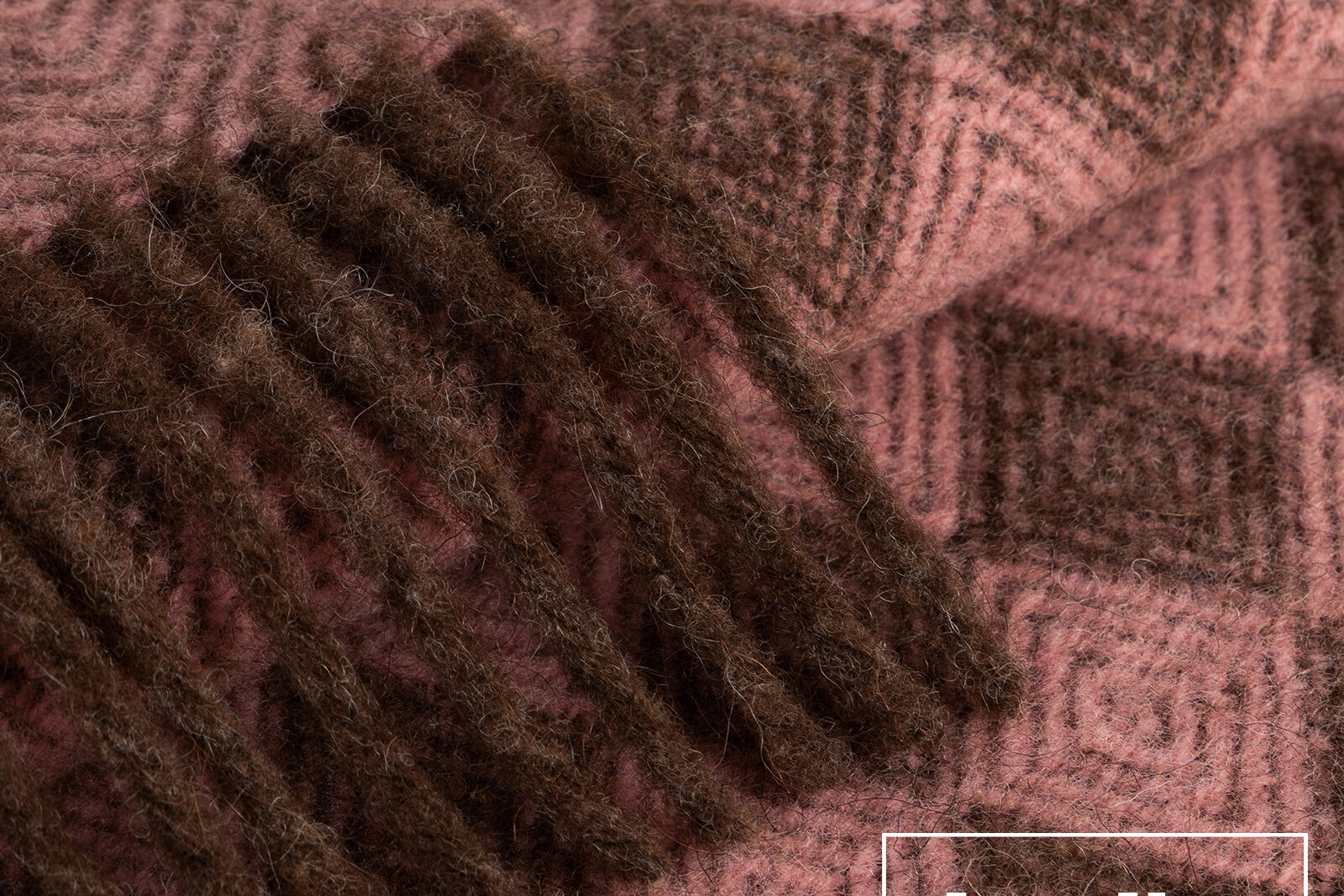
A faint smell of sheep, a little fluff on your jumper and a few bobbles where the throw rubs are all normal for a new wool throw. The smell comes from lanolin, the wax sheep produce to protect their fleece, and it fades with airing. Loose fibres left over from spinning and weaving work their way out in the first weeks. Bobbles form wherever wool is rubbed, and a fabric shaver or a wool comb lifts them off.
None of this is a fault, and none of it calls for washing: all our wool throws, including the merino and the cashmere-merino (90% merino wool, 10% cashmere), are labelled do not wash anyway. What does deserve a message to us is a smell that won't fade, shedding that won't settle, or holes and pulled threads. Here is what to expect, what to do about each and when to get in touch.
Why a new wool throw smells of sheep
Wool starts out coated in lanolin, a wax that keeps the fleece supple and helps it shed rain. The fleece is scoured, or washed, before it is spun, but a trace of lanolin stays in the fibre, and with it a faint farmyard smell. It is more noticeable when the wool is warm or damp, so you may catch it on a wet day or when you first wrap up under the throw.
A new throw has also spent days or weeks folded in its packaging, which holds on to smells from the journey. Our throws are OEKO-TEX® certified; a light sheep smell is simply the wool. To air it out:
- Unfold the throw and give it a good shake outdoors.
- Hang it over a washing line or a clothes airer outside for a few hours, in the shade and on a dry day. Direct sun can fade colours, and rain soaks the wool.
- If you can't hang it outside, drape it over an airer by an open window, away from radiators.
- Repeat over a few days if the smell lingers. It fades faster in use and in fresh air than folded in a cupboard.
Don't try to wash the smell out, and don't cover it with fabric sprays or perfume: fresh air does the job without risk to the fibre. If the throw smells musty rather than sheepy, it has probably been damp for too long; spread it out somewhere airy until it is completely dry. If one of our wool throws ever needs a proper clean, have it dry cleaned (solvent P). For woollens whose label allows washing, our guide on how to wash a wool blanket explains how to do it carefully.
Why a new throw sheds
Wool yarn is spun from fibres of different lengths. Some short fibres end up only loosely held in the yarn, and a few more come loose as the fabric is finished. In the first weeks of use, rubbing and shaking work those loose ends out: you will see fluff on dark clothes, on the sofa and in the air when you shake the throw. It is fibre the throw can spare, not the throw coming apart, and it should slow down noticeably after the first few weeks. To help it along:
- Shake the throw outdoors now and then, especially in the first weeks.
- Brush it gently with a soft clothes brush, always in the direction of the fibres, to lift out loose ends.
- Clear fluff from clothes and upholstery with a lint roller or a slightly damp rubber glove.
- Don't pull at a loose end or a stray loop. If a yarn gets snagged into a loop, gently stretch the fabric around it to ease it back, or pull the loop through to the back with a blunt needle.
Why bobbles form, and how to remove them
Bobbles, also called pills, start as loose fibre ends on the surface. Friction rolls them into tiny tangled balls, and fibres still anchored in the yarn hold the balls in place. That is why they appear where a throw works hardest: where you sit on it, along the edge you hold, against the sofa arm, and where it rubs on jeans, zips or a pet's claws. Fine, soft fibres such as merino and cashmere bobble more readily than coarse wool, so a few bobbles in well-used spots come with softness and are no sign of a fault. Our merino throws are 80% merino wool and 20% nylon: the nylon strengthens the yarn, but it doesn't stop bobbles forming.
To remove them gently:
- A fabric shaver. Lay the throw flat on a table and hold the area taut. Move the shaver in small circles without pressing, and let the blades do the work. Try it on a corner first, stay clear of the fringes and edges, and empty the fluff chamber often.
- A wool comb. This is a fine-toothed comb made for knitwear. Hold the fabric flat and comb in short, light strokes in one direction. It is slower than a shaver but very gentle, which suits our softest throws.
- Small scissors for the odd large bobble: snip it off level with the surface.
Avoid two things. Pulling bobbles off by hand drags more fibre out of the yarn and starts the next bobble, and razors can cut the surface. Remove bobbles only where they appear, not across the whole throw: every pass takes off a little fibre, so shave when it is needed, not as a routine.
How to keep bobbling down
You can't stop a wool throw bobbling completely, but you can slow it down:
- Move the throw around. Turn it and swap ends so it doesn't always rub in the same place.
- Keep it away from hook-and-loop fastenings, zips, rough upholstery and claws.
- Brush it gently now and then. Lifting out loose fibres before they tangle means fewer bobbles.
- Air it rather than wash it. Machine washing rubs fibres together and is a common cause of bobbling on washable woollens, and our wool throws are labelled do not wash anyway.
- Store it clean, dry and loosely folded in a breathable cotton bag rather than plastic.
Bobbling is often worst in the first months and settles once the loosest fibres have been used up.
When to contact us
We weave our throws in our family's own mill, and we want to hear when something isn't right. Email hey@lyhome.me with your order number and a photo if:
- a chemical or musty smell is still there after several airings;
- shedding hasn't slowed after the first few weeks, or has left thin patches;
- you find holes, broken or pulled threads, or fringes coming undone;
- bobbles cover the throw within days, not only where it rubs;
- the throw arrived damaged, or it isn't the one you ordered.
You can also return a throw within 30 days. That is a promise we make on top of your 14-day statutory right to cancel. Return postage is yours to pay unless the item arrived wrong or damaged, and we usually refund within 7 days of receiving it back. The details are on our returns page.
FAQ
How do I stop my wool throw bobbling?
You can slow it rather than stop it: move the throw around so it doesn't always rub in one spot, keep it away from zips and claws, and brush it gently now and then. Remove bobbles with a fabric shaver or a wool comb.
Why does my wool blanket smell like sheep?
A trace of lanolin, the wax in a sheep's fleece, stays in the wool after it is cleaned and spun. The smell fades with airing, though you may notice it again when the wool is warm or damp.
Why is my wool blanket shedding?
Short, loose fibres left from spinning and finishing work their way out in the first weeks. Shake and brush it gently and the shedding should slow down. If it doesn't, email us.
Can I wash my new wool throw to get rid of the smell?
Not if it is one of ours: our wool throws are labelled do not wash. Air them, or have them dry cleaned (solvent P). With any other throw, follow its own label.