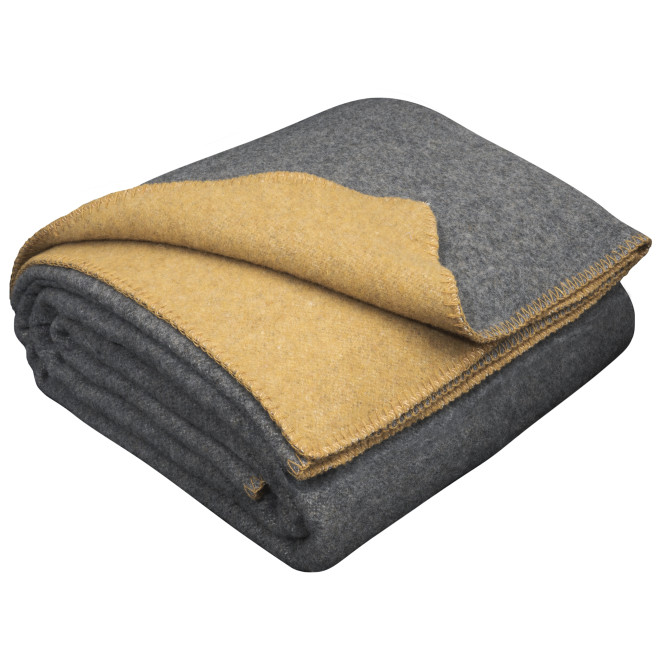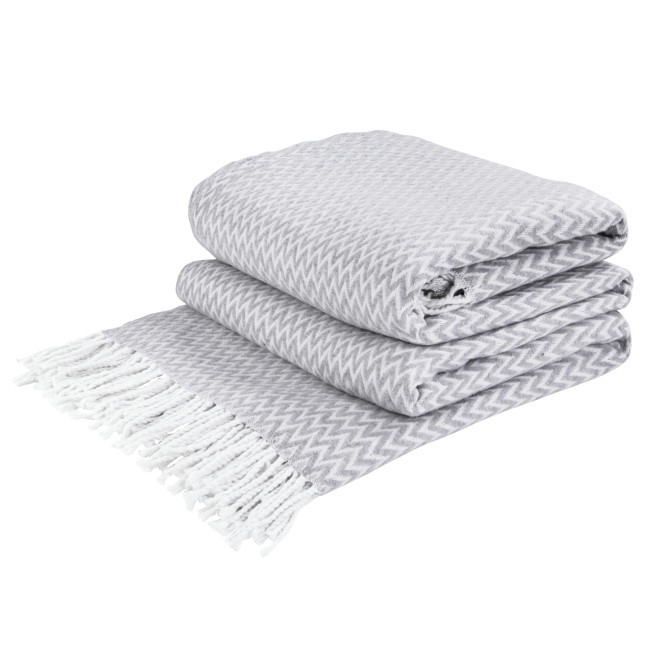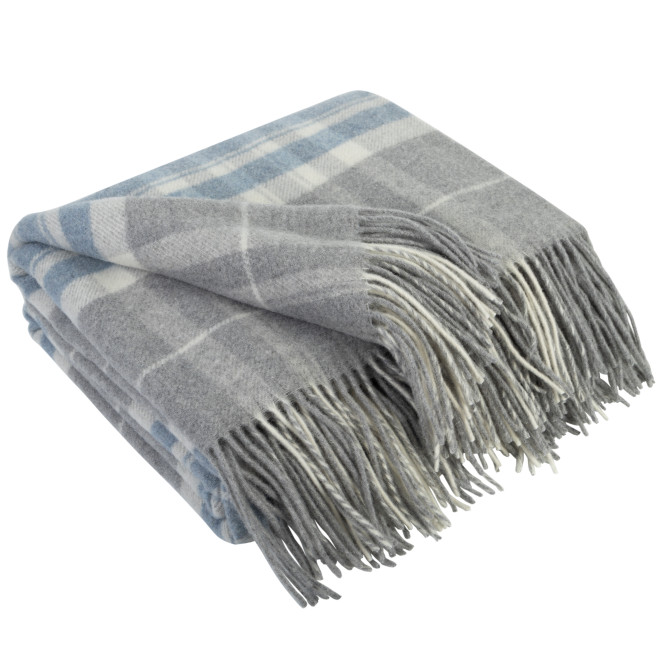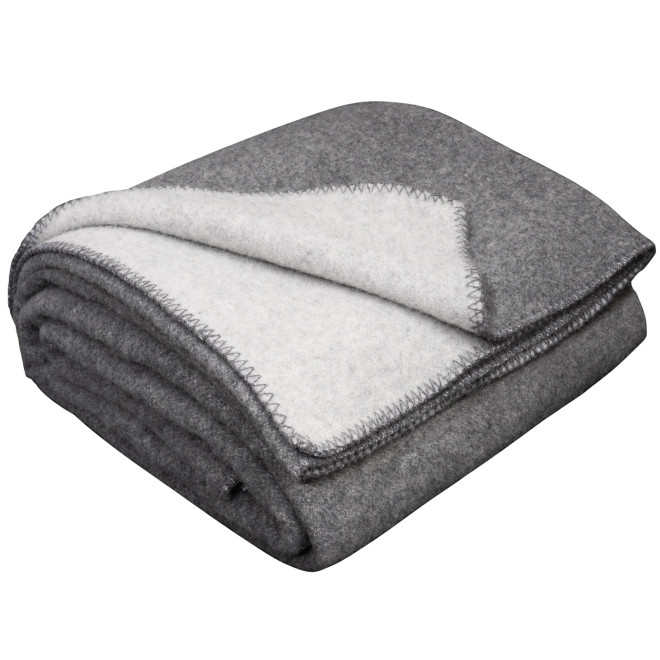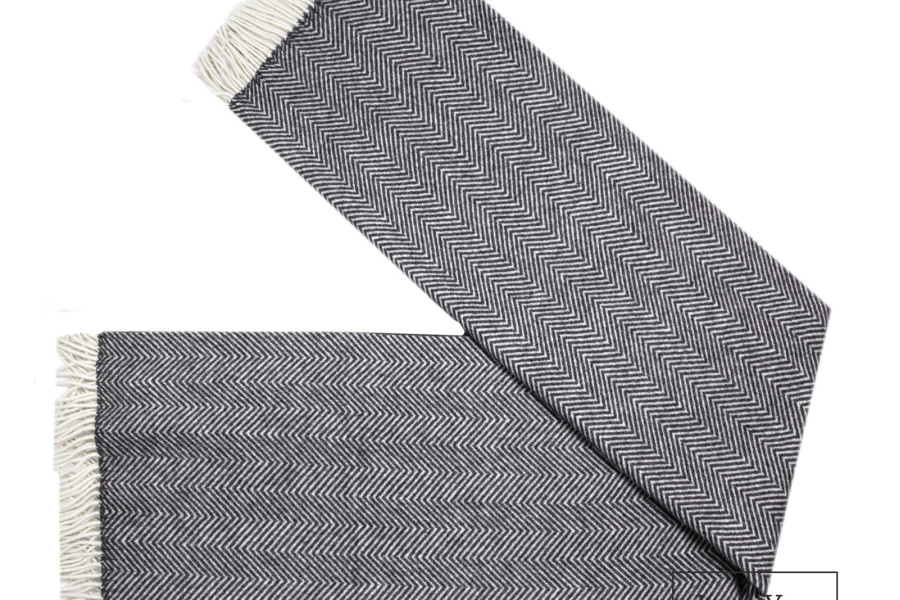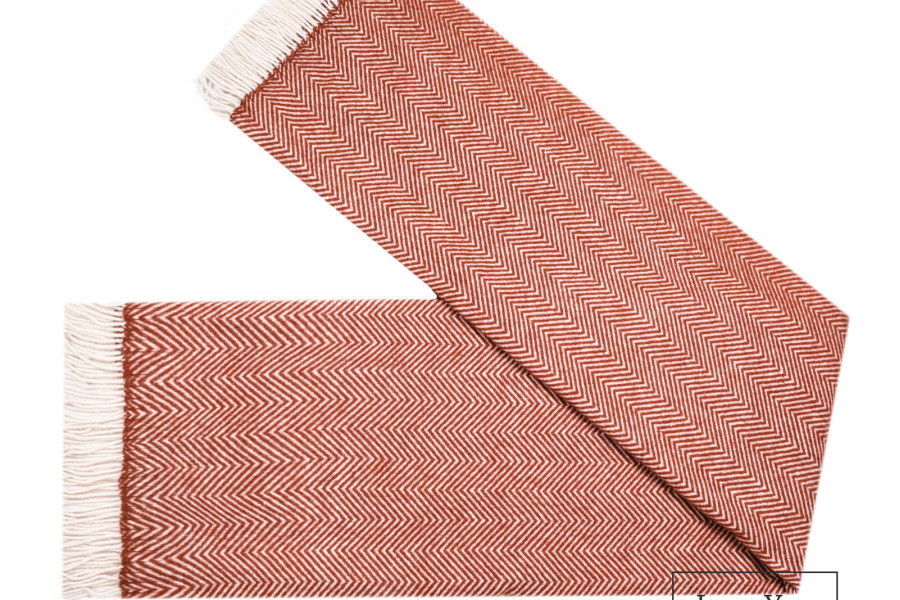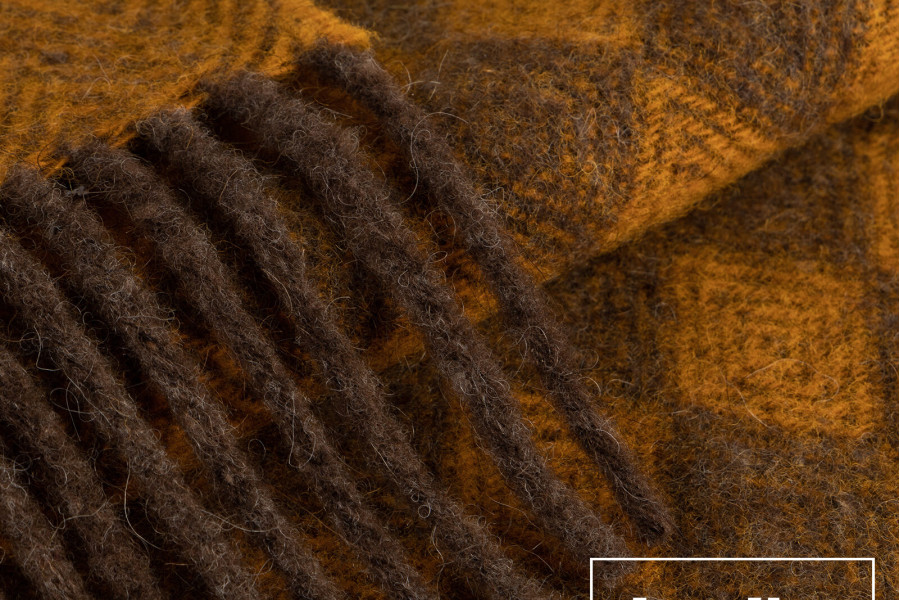
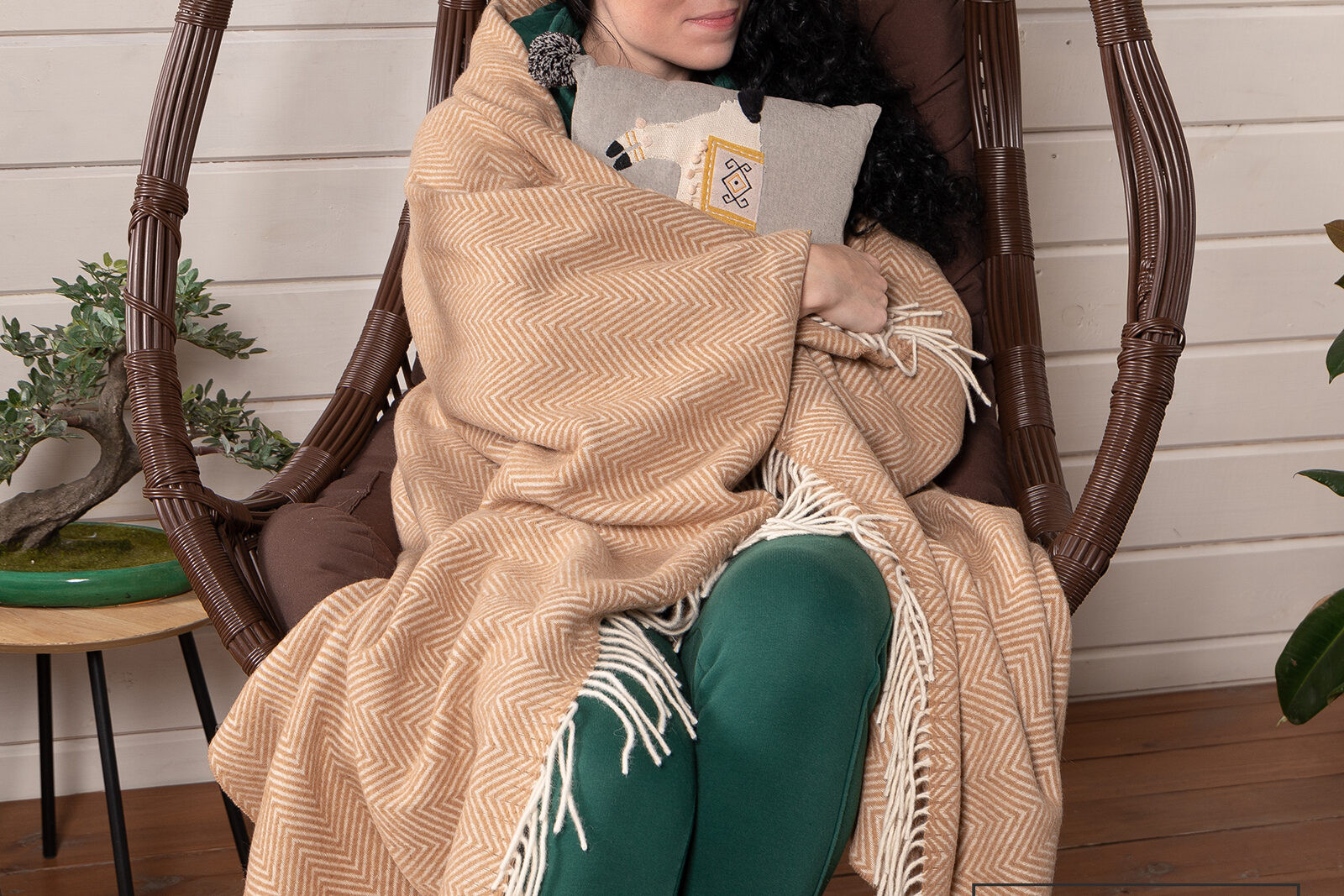
Our merino throws are 80% merino wool and 20% nylon, a fibre you will also see on labels as polyamide. The merino gives the throw its warmth and its soft, springy feel. The nylon has a quieter job: it adds strength to the yarn and helps the throw keep its shape while it is pulled, folded, sat on and tucked in, evening after evening.
So this is still a wool throw: four-fifths of the fibre is merino. The blend also costs less to make than pure merino, which is part of the reason our merino throws start at £49.90. Below we explain what each fibre does, what nylon doesn't do, why the care stays the same and how to read the composition label on any wool throw, ours included.
What the merino does
Merino is a breed of sheep with an unusually fine fleece. Fine fibres bend when they meet your skin instead of pressing into it, which is why merino feels smooth rather than prickly to most people. Each fibre is also crimped, full of tiny waves, so merino yarn is springy and holds plenty of still air. Still air is what keeps the warmth in under a throw.
Like all wool, merino can take up moisture vapour without feeling damp, and it doesn't hold on to smells easily, so a merino throw stays fresh on the sofa with regular airing. All of this comes from the wool, not from the nylon. On our own 1–5 scale, our merino throws score 4 for softness and 4 for warmth.
What the nylon does
Nylon is a synthetic fibre that is strong and hard-wearing for its weight, which makes it a good partner for merino. Merino is soft precisely because its fibres are thin, and thin fibres are individually weaker than thick ones. Blending nylon into the yarn gives it a stronger backbone in the places where a throw works hardest:
- Where it rubs: on the sofa arm, along the edge you pull up to your chin, at the corner you always grab.
- Where it is under tension: tucked in around a mattress or pulled tight over your knees.
- Where it hangs: draped over the back of a sofa, a throw carries its own weight all day. A stronger yarn helps it hold its shape instead of slowly stretching.
If 80/20 sounds familiar, it may be from carpets. Wool carpets have long been made from 80% wool and 20% nylon for the same reason: wool for the look and feel, nylon for strength where there is wear. Wool walking socks follow the same logic, with nylon added so the heels and toes stand up to use.
What the nylon doesn't do
A blend is easy to oversell, so here are the limits:
- It isn't there for warmth or softness. Both come from the merino and from the way the throw is woven.
- It doesn't make the throw washable. Our merino throws carry the same do-not-wash label as our other wool throws.
- It doesn't prevent bobbling. Any throw made from fine fibres can form small bobbles where it rubs. They come off easily with a fabric shaver or a wool comb.
- It doesn't make the throw synthetic. At 20%, nylon is the minor partner. The throw looks, feels and behaves like wool.
Price and care
Merino costs considerably more per kilo than nylon, so a yarn that is one-fifth nylon costs less to make than pure merino. We would rather say that openly: the nylon is there for strength, and it also helps keep our merino throws between £49.90 and £69.90. They come in three sizes and about 30 colourways, all woven in our family's own mill in Ukraine:
| Size | Weight | Style |
|---|---|---|
| 130 × 170 cm | 890 g | Double-sided |
| 140 × 200 cm, including 5–10 cm fringes | 730 g | Chevron, corner chevron, diamonds, squares, stripes, gradient squares and a Christmas design |
| 150 × 215 cm | 1,450 g | Double-sided |
The care doesn't change with the blend. Like our other wool throws, the merino throws are labelled do not wash. Air yours outdoors for a few hours now and then, out of direct sun and rain, and have it dry cleaned (solvent P) when it really needs cleaning. Our guide on how to wash a wool blanket covers careful home washing for woollens whose label allows it. With any throw, the label on the item decides.
How to read a composition label
UK labelling rules require textiles to state their fibre content, with percentages by weight listed from the largest share down. The label tells you far more than the product name does. What to look for on any wool throw:
- Numbers, not adjectives. "Merino blend", "wool-rich" and "cashmere feel" are descriptions. The percentages tell you what the throw is made of.
- Polyamide is nylon. Labels often use the technical name. "80% merino wool, 20% polyamide" and "80% merino, 20% nylon" describe the same blend.
- Merino names the sheep. It tells you the wool is fine. "Wool" on its own could be fine or coarse.
- Pure new wool is about origin, not softness. It means the wool has not been used in a finished product before. It says nothing about how fine the fibre is.
- A cashmere blend should give its percentage. Our cashmere-merino throw is 90% merino wool and 10% cashmere, and we say so wherever we mention cashmere.
- Country of origin isn't always given. Ours says Ukraine, where every one of our throws is woven.
If you'd rather have no nylon
Some people prefer a throw with no synthetic fibre at all, and two of our wool ranges have none. Here is how our three wool throws compare, scored on our own 1–5 scale:
| Throw | Composition | Softness | Warmth | Price |
|---|---|---|---|---|
| Merino | 80% merino wool, 20% nylon | 4 | 4 | £49.90–69.90 |
| Cashmere-merino | 90% merino wool, 10% cashmere | 5 | 4 | £84.90–89.90 |
| Pure new wool | 100% New Zealand wool | 3 | 5 | from £49.90 |
The cashmere-merino throw (10% cashmere) is the softest we make, but it costs more and comes in one size, 140 × 200 cm including fringes. The pure new wool throw is the warmest, but its fibre is coarser and can feel scratchy on bare skin. The merino throws sit between the two, with the widest choice of sizes and colours. How the fibres differ in fineness, warmth and durability is explained in our comparison of merino, cashmere and pure new wool.
FAQ
Is a merino and nylon throw still a wool throw?
Yes. Ours are 80% merino wool by weight, and the warmth and softness come from the merino. The nylon adds strength to the yarn.
Is 100% merino better than a merino and nylon blend?
It depends on what matters to you. Pure merino has no synthetic fibre and usually costs more. A blend with nylon has a stronger yarn and costs less, and in both the warmth comes from the merino.
What does polyamide mean on a label?
It is the name labels use for nylon. "80% merino wool, 20% polyamide" is the same blend as our merino throws.
Can I put a merino and nylon throw in the washing machine?
Only if its own label allows it. Ours are labelled do not wash: air them, and have them dry cleaned (solvent P) when needed.